
18 August 2026
Interviewed by: Elizabeth Ransom
Interdisciplinary artist Dakota Mace uses a variety of alternative photographic processes such as chemigrams, pinhole photography, and cyanotypes to tell indigenous stories of Diné culture. Dakota’s images make visible indigenous narratives and ancestral histories. Much of her work centers around relationships between place and memory. Using rhythmic repetition, abstraction, and symbolic use of color Dakota visually explores the stories held within the land.
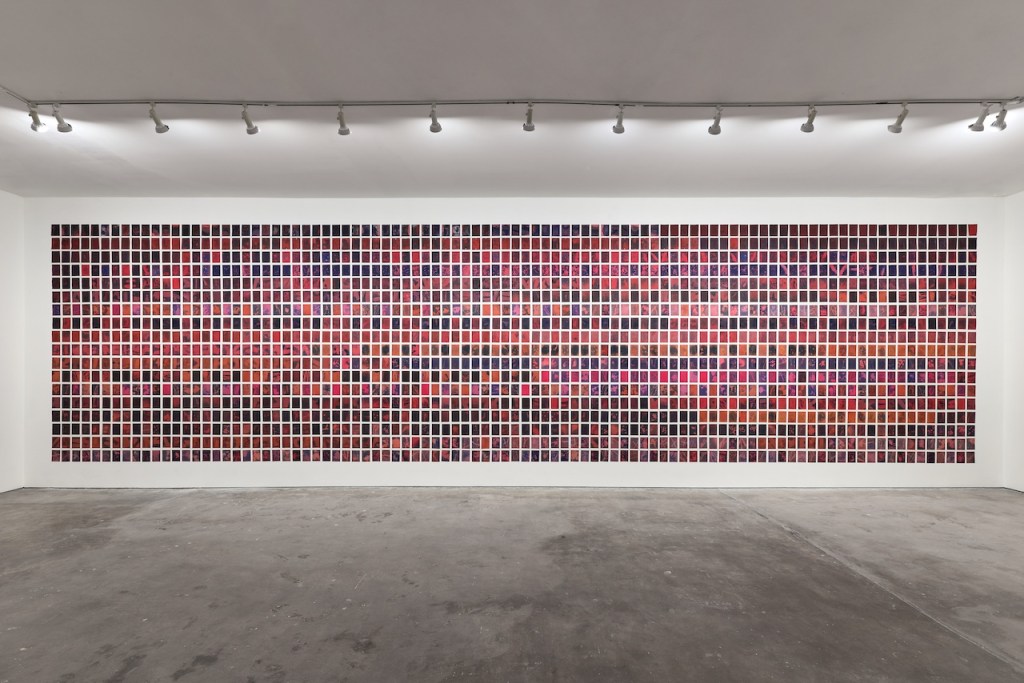
Dahodiyinii, SITE Santa Fe, 2025. Photograph by Brad Trone
Elizabeth Ransom: In your body of work Dahodiyinii you layer family photographs and cyanotypes to tell Diné stories of The Long Walk, a 300 mile trek that was taken in 1864 from northeastern Arizona and northwestern New Mexico by the Diné to an internment camp in eastern New Mexico. During this trek around 200 people died from starvation and violence from U.S. military personnel. Can you tell us a little bit about the processes behind your work and how representing these narratives provides an opportunity for healing?
Dakota Mace: The title, Dahodiyinii, loosely translates to “sacred places,” but its meaning goes deeper than that. It’s not just about geography; it’s about presence, about the act of sitting with a place—acknowledging its weight, its history, and the echoes it holds. It’s about listening, not just with our ears but with our whole being, to the land as both witness and teacher.
Dahodiyinii is a powerful meditation on the relationship between land and community. I used the cyanotype printing process to activate landscape as a storyteller and an image-maker, emphasizing the power of nature to record and keep ancestral memory and indigenous knowledge.
This project became a reflection on the pivotal moments that have shaped not only our present but the very way we understand who we are. For me, the starting point was Bosque Redondo. Growing up, it was the place we didn’t talk about—the place we were warned against visiting. There was an unspoken rule: Don’t go there. Don’t speak of it. As a child, I never questioned that silence. But during the pandemic, with the world itself paused I began to ask: Why? Why don’t we talk about these histories?
Rather than turning away, Dahodiyinii leans into these sacred, painful places—not as sites of defeat, but as spaces of remembrance and potential healing. The land doesn’t forget. It holds our stories even when we can’t bear to speak them. It bears witness to both our suffering and our survival. Through this work, I wanted to recognize the land not just as a backdrop but as an active participant in our histories, a guide helping us navigate the complexities of our past and the possibilities of our future.
I created small-scale cyanotype prints of abstracted locations seen as sacred for the Diné along the trail to Bosque Redondo. I allow the landscape to create the photograph, letting the earth and its materials create abstract forms of the memories that it holds. Each cyanotype is made to remember my ancestors, who went unnamed or unrecognized, and their identity embedded within the land itself.
The installation brings together 2000 cyanotypes dyed with cochineal, tiled together side by side in a 60 foot composition in shades of black and deep red, with audio excerpts of Diné elders and their children recounting stories. Cyanotype is a form of camera less photography, traditionally created by placing objects on light-sensitive paper to capture their forms. Here I used the paper to index the environment, placing it directly on the land at points along the trajectory of my ancestors’ path. Wind, water, sand, and rocks are imprinted and leave traces in different ways on each of the prints.
Purposefully inverting the act of photography, which historically was used to surveil and exploit indigenous populations, the installation instead focuses on abstraction as a tool for honoring each person who lost his or her life during this forced migration. Rather than show the trauma and destruction of life, which was thought to trigger recurrent suffering, I offer photographs literally created by the landscape to reimagine a site of memory, resilience, protection, and freedom.
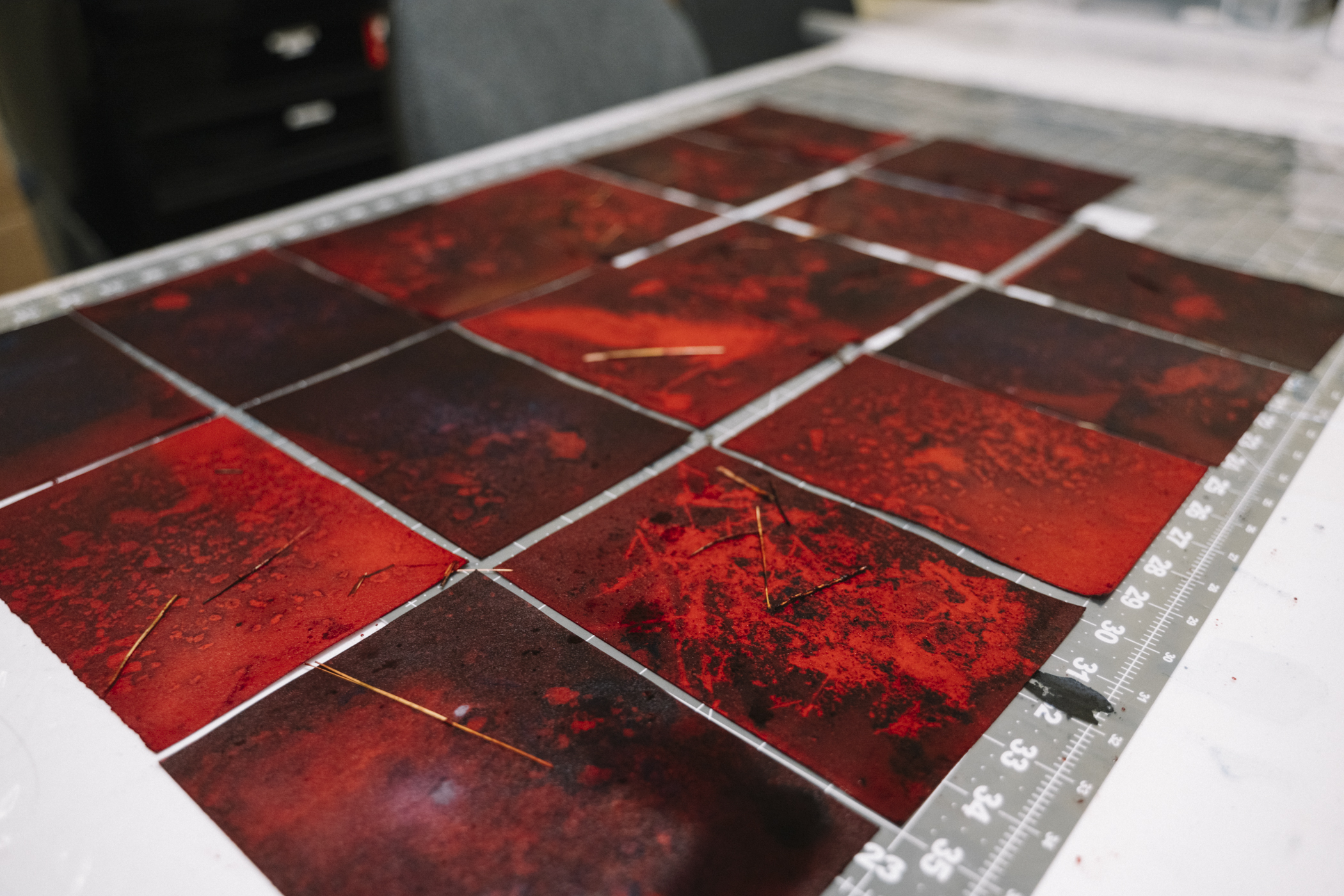
Detail image of Dahodiyinni, Dakota Mace studio, 2025
Elizabeth Ransom: In addition to exploring alternative photographic processes, listening is at the heart of much of your work. Could you discuss the value of gathering these oral histories and what it means to you personally to bear witness to them?
Dakota Mace: My process always begins with a photograph, which serves as a memento of a moment, place, or time from my visit. Unlike a quick snapshot, these photographs are created over time through various alternative processes. They capture the environment by considering ałk’idáá, which involves layering undisclosed locations, temperature shifts, and weather changes. For me, a photograph is more than just a simple capture of a scene; it embodies the essence of my practice. It reshapes the perspective on what it means to preserve a moment and what should be captured. It embraces the true nature of photography: a balance of light and shadow, with the land dictating how the image will be perceived and telling its own story.
In creating the image, I take a moment to reflect on the histories of these places. It always begins with a simple walk around the grounds, where I offer my greetings and gain insight into how the light falls on the land. I observe how shadows shape moments that often appear and disappear before my eyes. To truly understand a place requires time, and much of my work has been approached with a sense of wonder, grounded not only in new experiences but also in new ways of telling stories. So rather than the Western concept of gathering and preserving, it’s about stopping and listening to the land tell its stories while the work is just a small moment of that story interpreted through my eyes.
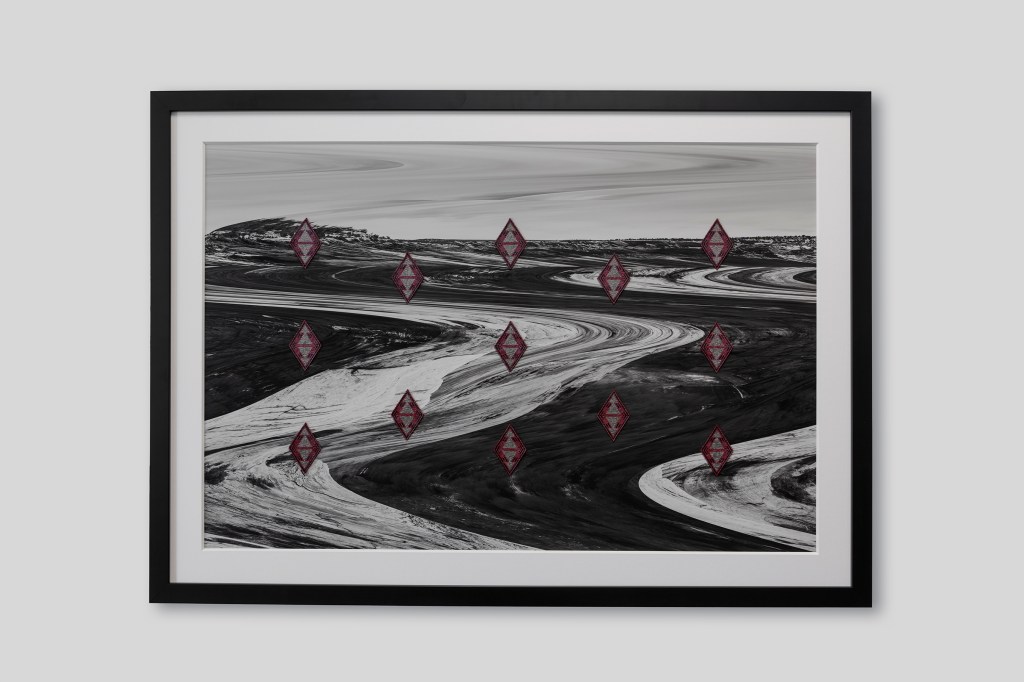
Tséyi (Among the Canyons), Archival Giclée Print, Glass Beadwork, 2023
Elizabeth Ransom: Your work often navigates the American landscape, a terrain intimately shaped by what was taken from your ancestors. How does the concept of place inform your creative practice?
Dakota Mace: I utilize the land and its natural materials to offer a different perspective on sight and visibility, as a study not only of the landscape but also of how meaning is conveyed through our emotional response to a place. Each work I create captures a moment and shifts with the environment, revealing only a glimpse of the stories embedded within it. Although the markers of time have long vanished, the land still sings.
These locations become activated as we listen to their fragmented or faded narratives, much like memory does. Similar to ałk’idáá, much of my work represents a temporality that does not follow Western linear histories but instead embraces place as both storyteller and subject. I recognize the land not merely as a backdrop but as an active participant in our histories, guiding us through the complexities of our past and future possibilities.
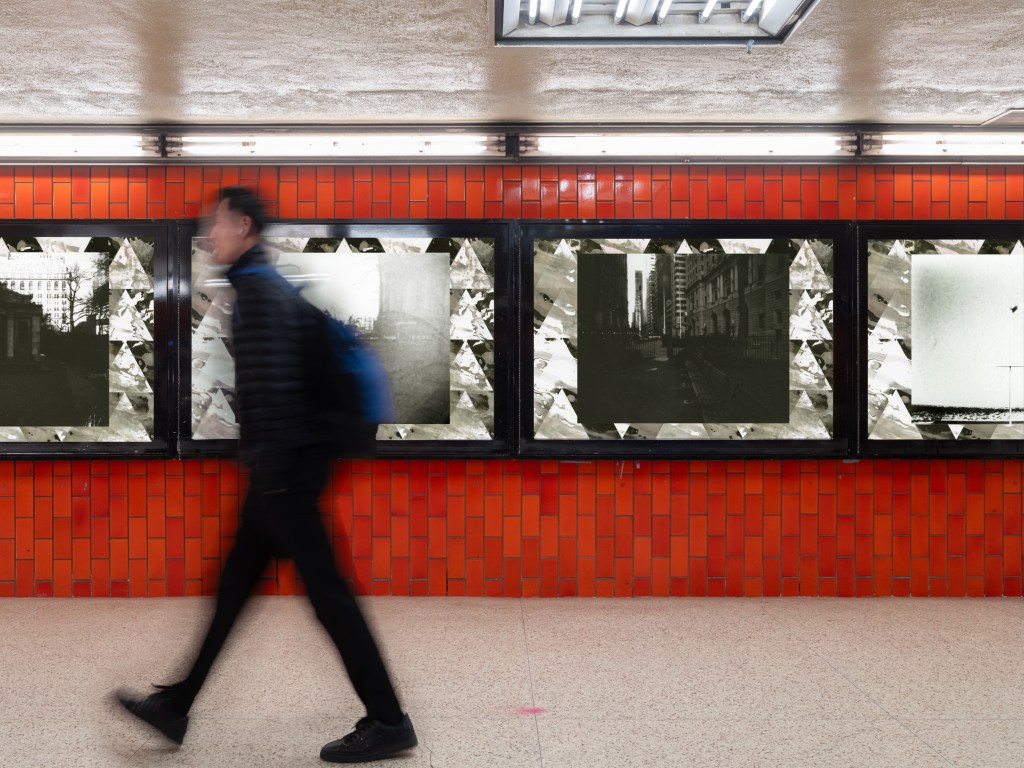
Indigenous Presence, Bowling Green Station, NYC 2026
Elizabeth Ransom: In your new body of work Indigenous Presence, you combine pinhole photography, chemigrams, cliché verre, hand-drawing and photography to investigate fragmentation of memory in relation to place. Can you share with us the story behind this work and how you layered multiple alternative photographic processes?
Dakota Mace: In this series, I explore historical sites within urban environments that have become unknown or unacknowledged. Bowling Green is one of numerous locations in the U.S. that holds significance for many Indigenous communities, yet is often overlooked. Historically, this site served as a council ground for tribes and was the location where Manhattan was sold to Peter Minuit in 1626. Over time, the land was utilized for various purposes but was not officially designated as public property until 1686, when the City Charter labeled it as “waste, vacant, un-patented and unappropriated lands” under municipal domain.
Many historical markers remain hidden or blend into their surroundings. I utilize a pinhole camera, chemigrams, and cliché verre to offer a different perspective on sight and visibility. Each photograph captures a moment and shifts with the environment, revealing only a glimpse of the stories embedded within it.
My work departs from the Western notion of linear time. Instead, it embraces a natural progression that is layered, constantly evolving, and adapting—a circular order known as ałk’idáá, a Diné concept that embodies the essence of the universe. This concept highlights how stories, balance, and the cyclical nature of time support the continuity of knowledge, collapsing the distinctions between past, present, and future.
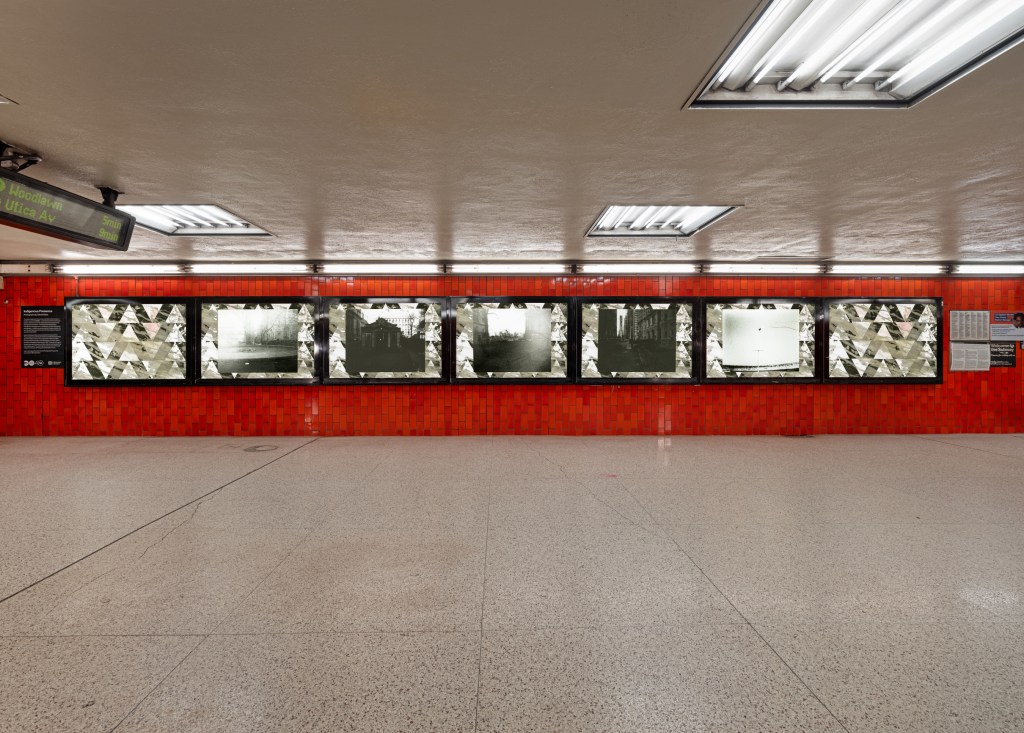
Indigenous Presence, Bowling Green Station, NYC 2026
For more information about Dakota Mace and her practice please visit her website HERE.


Leave a Reply