13 July 2026
Interviewed by: Elizabeth Ransom
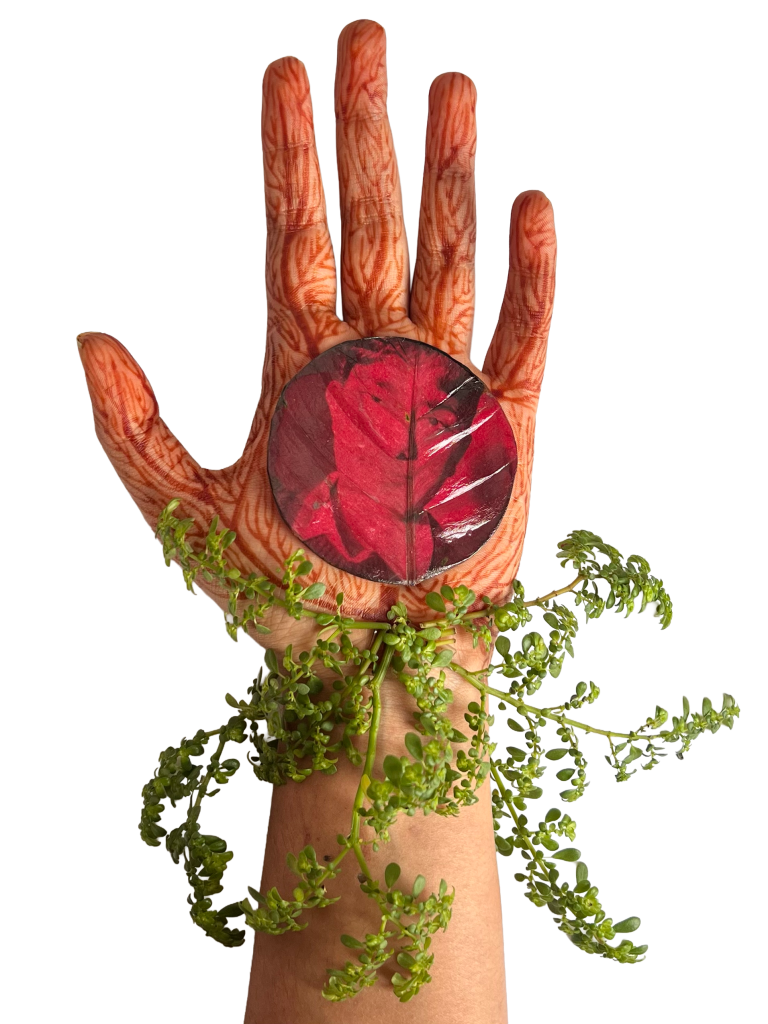
Riya Panwar’s photographs germinate, grow and eventually decay over time. Through acts of care Riya watches her images carry life. They explore themes of place, belonging, and migration. Due to the ephemeral nature of these processes the photographs eventually decay returning to the natural world. Her practice explores the relationship between science and art. Riya works with unconventional canvases such as apples and pears as well as creating her own bioplastics to print with.
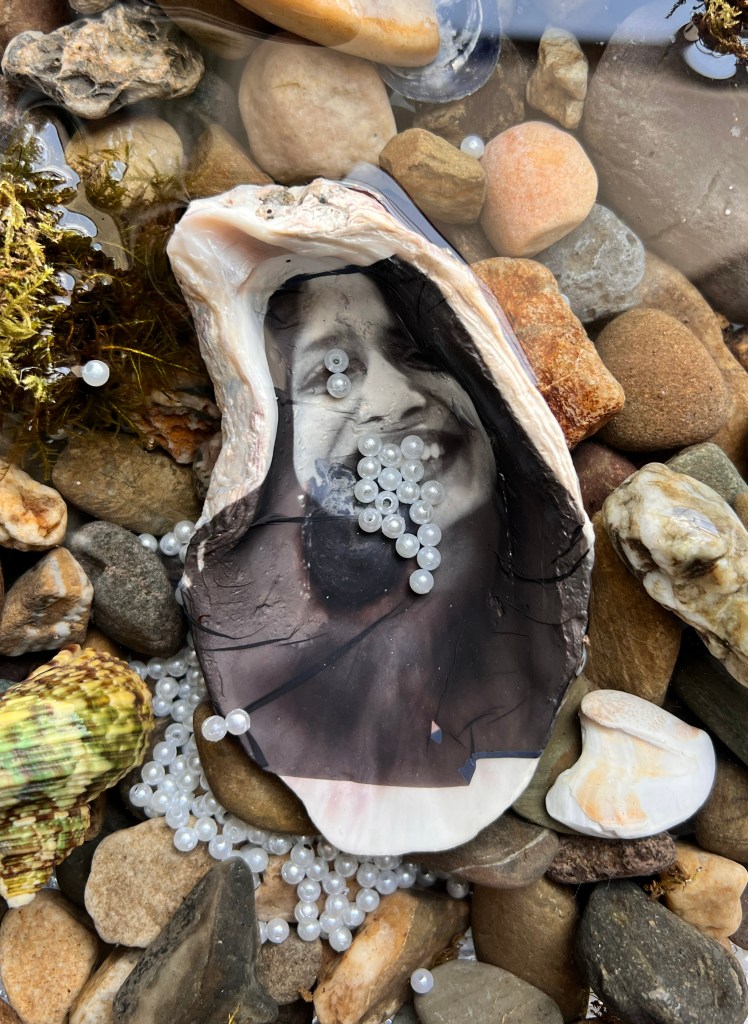
Elizabeth Ransom: By experimenting with a variety of surfaces, from apples to plant leaves, you challenge the preconception that photography must be two-dimensional, framed, and hanging on a wall. Your work interrogates what a photograph can be. Can you share with us how you explore the materiality of photography within your practice and the significance of working with non-traditional canvases?
Riya Panwar: Working with a variety of surfaces means pushing the idea of how an image can exist within materiality. It allows for possibilities that, at times, even I am not entirely sure about, and lets me see an image in a different light. What if it decays? What if it grows? What if it morphs itself around something that holds value for me? There is also a bigger picture to this. Working with non-traditional canvases has helped me become more conscious of my process and the cost of making.
Borrowing canvases from the nature around me, or making surfaces from scratch, allows me to move away from relying on expensive papers or conventional materials. Instead, I sit with an image and ask myself what already exists in the present that can become its canvas.
The idea is not to overthink, over-evaluate, or become too critical. The idea is simply to make, experiment, and grow through the process. Working with what I find has taught me to trust experimentation rather than perfection. It has also made me realise that the first thing we observe is not shops or materials, but nature itself. The leaves, the rocks, and the plants quietly sit with me throughout the process and, in many ways, become collaborators in the making of the work.
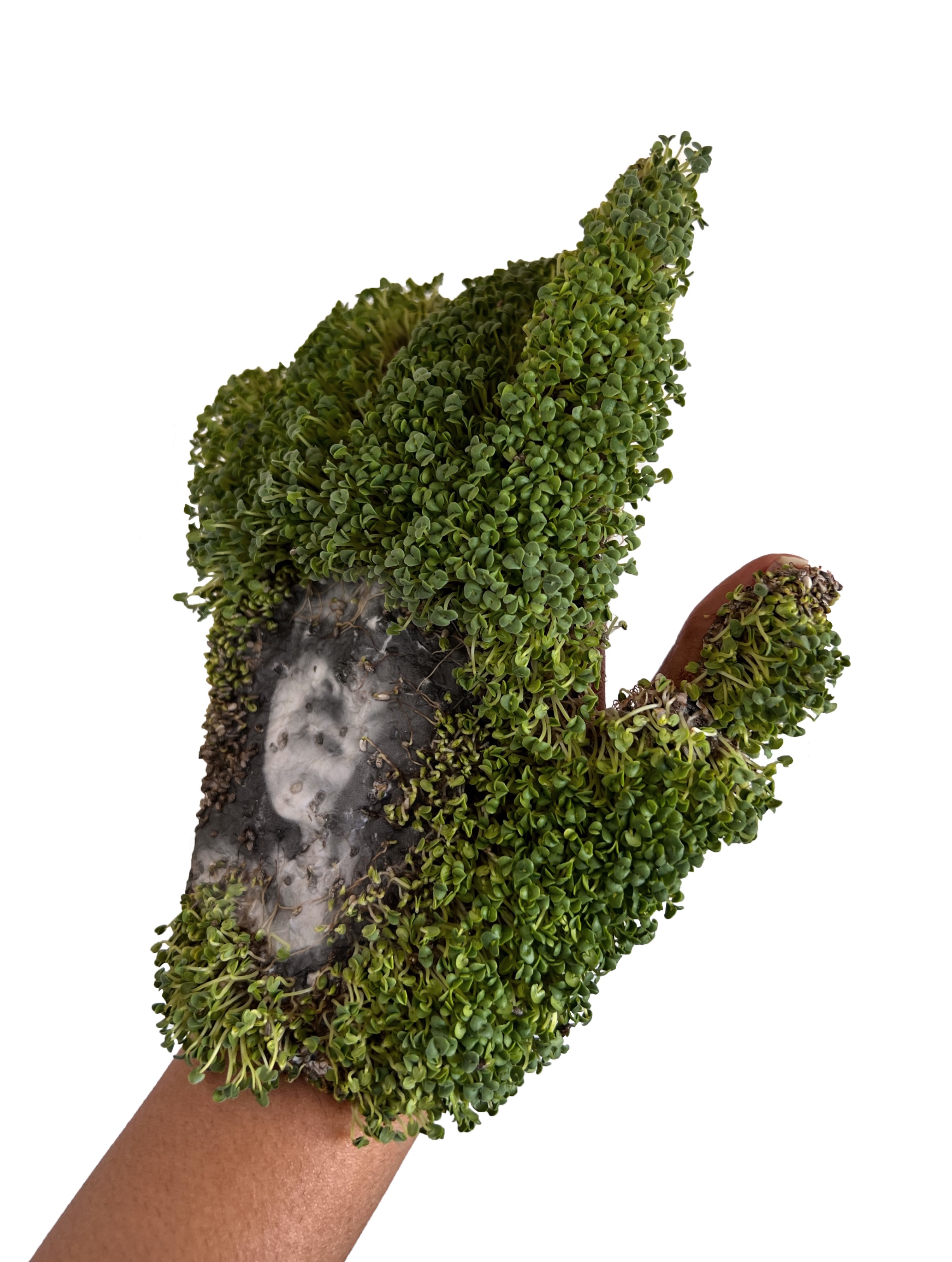
Elizabeth Ransom: In your series Germination you grow seeds directly onto the photograph, questioning whether photography can be a living organism. What does the new growth from these seeds symbolize within this body of work and can you talk us through the processes of creating these pieces?
Riya Panwar: Germination, as the title suggests, speaks about growth, but it also speaks about decay. Through making and experimentation, I realised I wanted to witness growth, roots, and decay not only symbolically, but in a very literal way. I wanted to see whether a photograph could carry life, and whether that life could continue beyond the moment the image was made.
For me, these works are thoughts made tangible. They are a way of communicating something beyond the photograph itself. During germination there is a cycle: life begins, something grows, and eventually it decays. I see that same cycle unfolding within the work.
Small seeds begin to sprout and find their own way around the image and the paper. Some survive, while others don’t. As I continue watering and caring for the work, small green leaves begin to appear. The photograph becomes something that requires attention and care beyond image-making. Eventually everything dries out, yet the roots continue to hold onto the paper, leaving their own traces behind.
Watching this entire process has become just as important as making the work itself. It allows me to witness the cycle of life through an image that changes over time. I water it, protect it, nurture it, and simply spend time with it. The work teaches me as much as I shape it.
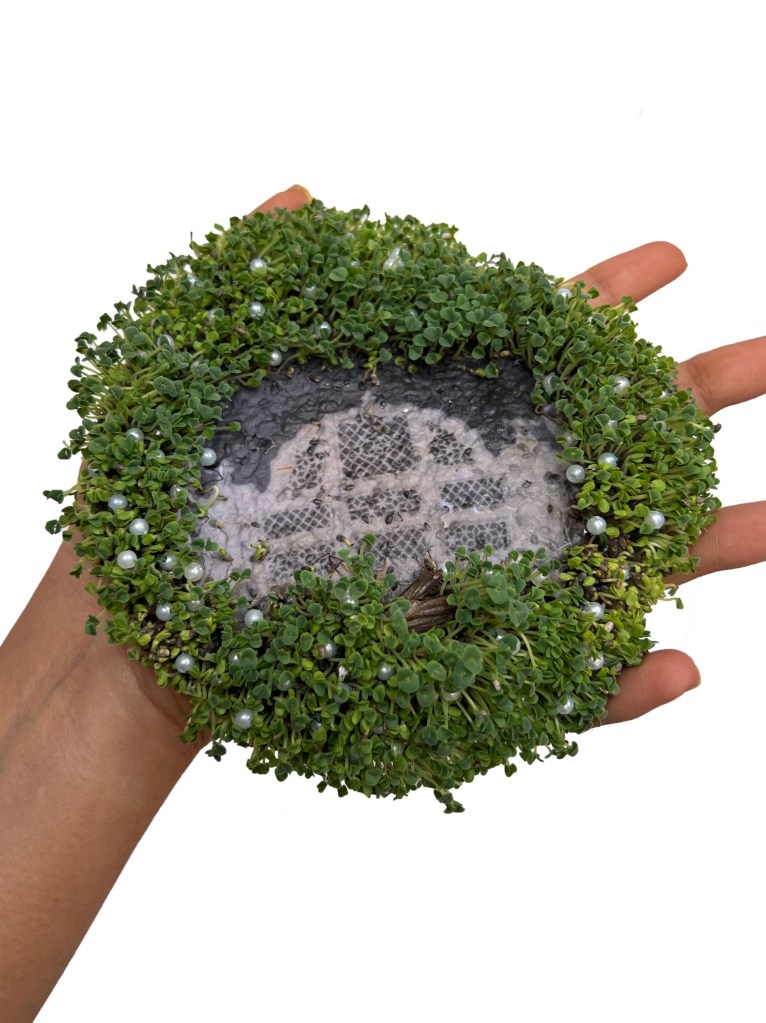
Elizabeth Ransom: Much of your work is of an ephemeral quality. The photographs will decay over time as the canvases themselves are perishable. Can you share with us why you choose to work with materials that go against photography’s innate ability to preserve and what roles decay and preservation play within your practice?
Riya Panwar: A constant migration has been my state of being and mind. I moved to the UK (London) in 2023 for my Master’s at the RCA, and since then I have been constantly shifting between countries and finances. During this process of life-changing decisions, my work cannot always stay with me physically, it has to exist somewhere beyond me.
This is where decay and ephemeral materiality come in. Working with materials that have a lifespan gives me a sense of relief. There is a cycle already built into them. They belong to the place they exist in before I move again. What remains is the image, the date, and the place, the city and country, becoming a record of where the work was made, where it lived, and how it grew in that environment.
This matters to me because materials like fungus, germination, or any organic surface are deeply dependent on their surroundings, the temperature, the water, the environment. In many ways, they behave like us. They adapt, they shift, they decay. So decay becomes a natural extension of that process, rather than something that opposes preservation. It allows the work to exist as something living, rather than
something fixed.

Elizabeth Ransom: Many artists view nature as a subject, but you treat it as a collaborator. What does that collaboration look like for you within your practice?
Riya Panwar: Nature is a collaborator for many reasons. It has shared space with me and allowed me to simply be. Nature does not question my work or ask me to justify it. Instead, it offers space where I can experiment freely, revisit ideas, and let things resurface over time.
For me, nature holds space without turning it into a box. As humans, we often feel the need to define everything, what is living, what is not, what belongs and what doesn’t. But when you sit with nature, it doesn’t ask for definitions. A tree doesn’t respond to your thoughts, the wind doesn’t ask you to explain yourself, and a rock simply exists with you in that moment.
At the same time, I think being conscious is important. I always ask before taking or borrowing from nature. That act matters to me. It shifts the relationship from extraction to exchange. In that sense, nature becomes a collaborator rather than a resource.
So for me, it is not about using nature as a concept or subject. It is about working with it, slowly and respectfully, and allowing that relationship to shape the work.

Elizabeth Ransom: Not only do you work with nature, but you also experiment with more environmentally friendly processes such as working with bioplastics. In your body of work Piece of Land, you examine the idea of belonging to a piece of land that will inevitably change over time. How does landscape shape the stories you tell and how do you use bioplastics to investigate place, belonging and identity?
Riya Panwar: Piece of Land, as the title suggests, is about what I can give back to the land. It is a conversation between me and the place I come from, and how I have seen it change over time.
Bioplastic became an important part of this work. Artist Martha really helped me move my research forward through her understanding of the material and its possibilities. Through this process, I was able to expand the work and eventually return the pieces back to my hometown, Dehradun, after completing my MA at the RCA.
For me, materiality is always tied to place. It already belongs somewhere. In Piece of Land, the bioplastic, being biodegradable, eventually returned to the soil and became part of the land again. That return was important to the work. It completed a cycle.
At the same time, I cannot carry everything with me as I move between cities and countries. So this process also became a ritual of letting go, of allowing the work to return to where it came from, rather than holding onto it. The idea of the ephemeral sits very closely with this. Some works live briefly, some transform, and some slowly become artefacts over time.
For more information about Riya Panwar and her practice please visit her Instagram HERE.


Leave a comment