
24 March 2026
Interviewed by: Elizabeth Ransom
In her long-term project Everything in the forest is the forest, British photographer Clare Hewitt cultivates an intimate relationship with a single woodland, collaborating with twelve oak trees and establishing a working studio within the forest itself. Based in the West Midlands, the project reflects on human isolation, the longing for community, and the quiet lessons offered by the natural world about connection, resilience, and care.
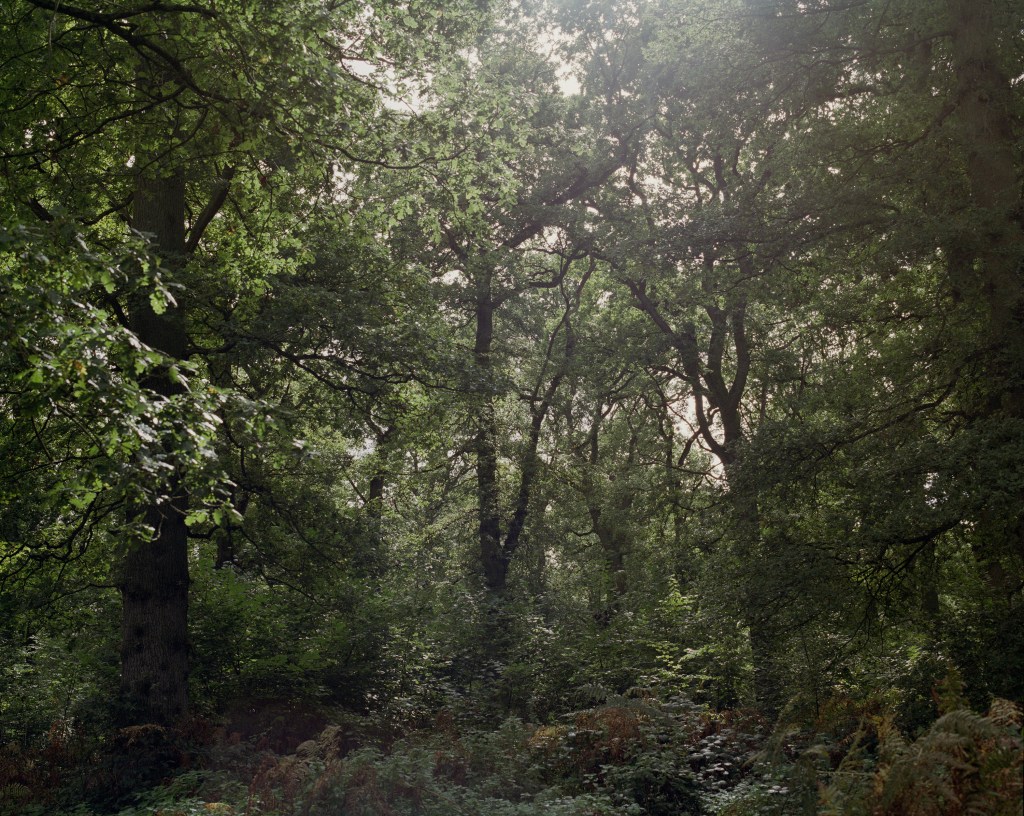
The Peace Tree, Summer © Clare Hewitt
Elizabeth Ransom: In your body of work Everything in the forest is the forest you respond to a 2019 government report that suggests that isolation and loneliness are increasing in rural areas in the UK. This lack of community juxtaposes the discovery that trees have the incredible ability to communicate, nurture and sustain their own communities due to these connections. Can you tell us about how the difference between human isolation and forest connectivity inspired this work?
Clare Hewitt: In the Foreword of Orion magazine’s publication, Old Growth, Robin Wall Kimmerer writes, ‘We are not trees. We lack their stillness, their presence, the generosity that comes from spinning sunlight to sugar. To stand in stillness for centuries requires ingenuity in harnessing physical forces and genius for collaboration. They learned long ago that the key to life as a sessile being is to cultivate good relationships. That all flourishing is mutual, especially when you can’t run away.’
Oak trees inhabit one place for hundreds of years. They grow alongside the same neighbours, with no possibility of leaving or being left. I think that permanence creates a different experience and understanding of community, grounded in interdependence rather than choice. It expands the idea of ‘we’ into something collective and continuous.
I experienced this directly whilst spending time with the forest, and researching oak trees. The forest became a space shaped by symbiosis and reciprocity, which are systems that exist because they are essential for shared survival.
In Alice Vincent’s Why Women Grow she writes, ‘All of us have to live in a world built upon deeply ingrained patriarchal, capitalist and white supremacist structures; even to imagine a way of living that counters these, let alone undergo a process of bringing it to life, is an admirable thing.’ I think that’s what the forest does, and what it has helped me to imagine: a different way of life based in community, circularity, gift economies, intergenerational care, resilience, and adaptation.
Those values have transformed my work and life. I’ve become more ecologically conscious, and I consider collaboration, both human and more-than-human, as a central part of my practice.
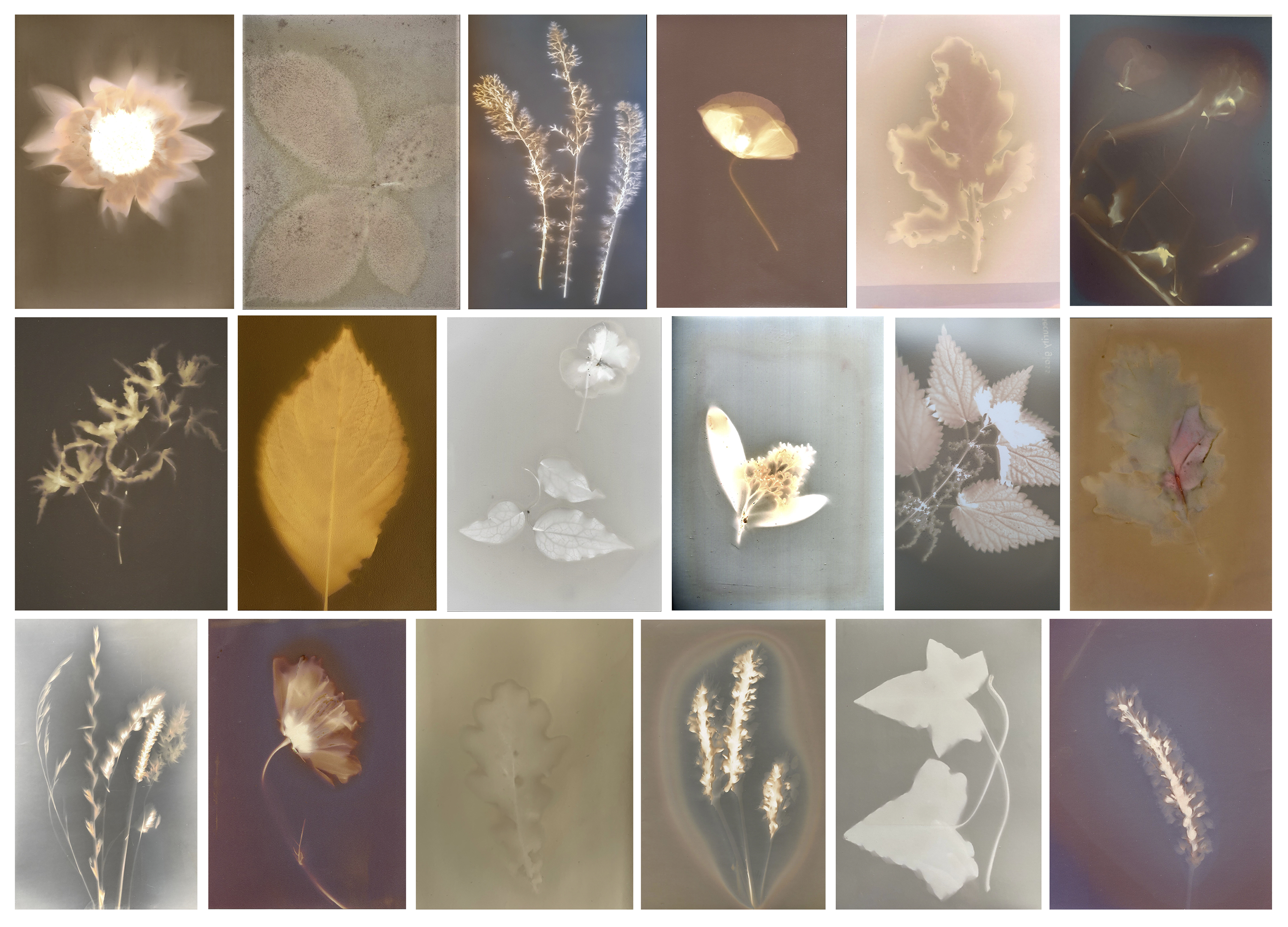
Lumen prints created by workshop participants © Everything in the forest is the forest workshop participants
Elizabeth Ransom: Mirroring the behaviour of the trees, you set up a series of workshops with 14 people during lockdown teaching various alternative photographic processes. What were some of the challenges you found in building community during a time when feelings of loneliness had been exacerbated due to the COVID-19 government lockdowns?
Clare Hewitt: Originally, I had intended for us to meet at The Birmingham Institute of Forest Research (University of Birmingham’s BIFoR FACE) where the project is based, once a month, to create work together. The participants live in the areas around the forest.
However, during the pandemic that wasn’t possible, so I hand-delivered the equipment they needed and ran the workshops online. This was a slight challenge because we were all adjusting to digital systems at that time. However, everyone’s enthusiasm for sharing their processes and outcomes via Padlet and other social media platforms, as well as during the workshops, was inspiring.
It would be interesting to understand how the experience would have differed if we’d been able to meet in person in the forest. However, the distance emphasised the importance of connection, and it was very special to all meet in person for the first time during the summer of 2021.
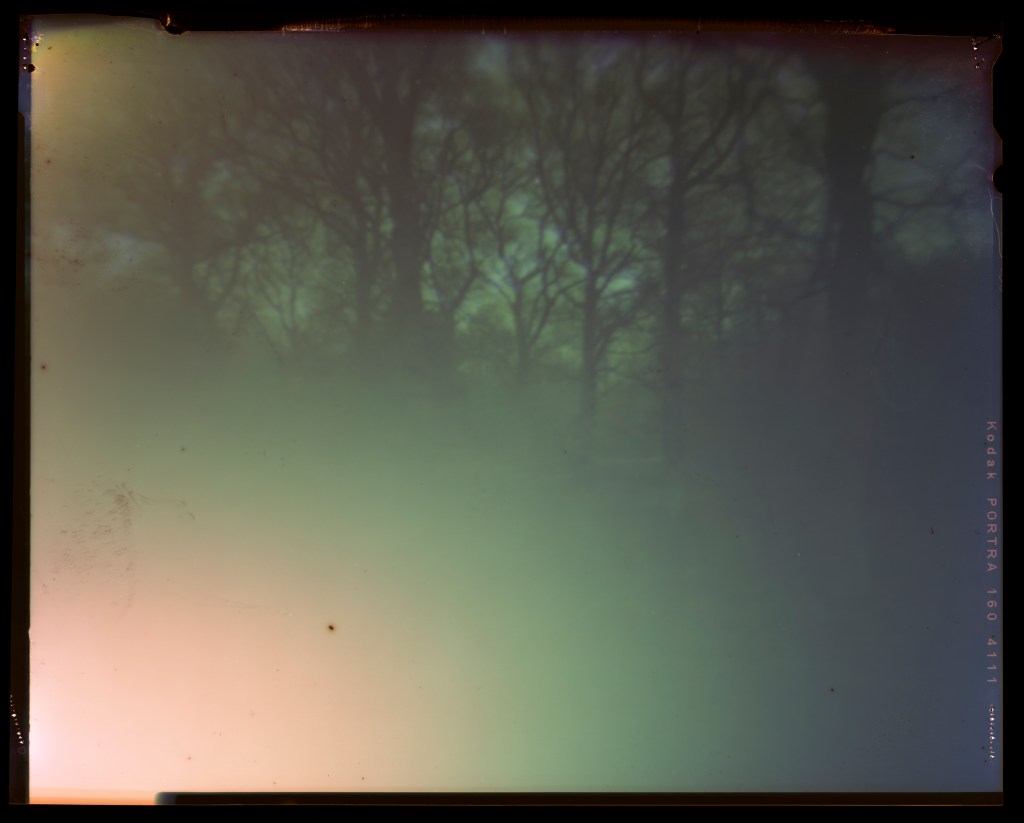
Six-month exposure of oak trees © Clare Hewitt
Elizabeth Ransom: A circle of twelve oak trees aged around 180 years old became central characters in this body of work. You made frequent trips to this community of trees documenting the forest over the seasons. You experimented with many forms of alternative photography including birdbox pinhole cameras, lumen prints, anthotypes, and soil chromatography. Can you share with us why you chose these specific methods and what it was like relocating your studio to the forest itself?
Clare Hewitt: When I began working in the forest, my daughter was a year old. I wanted to find a way of making imagery with the trees even when I was nurturing our family life at home. I imagined making photographs from the perspective of the trees, and the oaks taking care of the cameras in my absence.
Working with STEAMhouse in Birmingham, I designed and made 24 wooden pinhole cameras resembling birdboxes. In March 2020, I collaborated with a team of tree surgeons to affix two cameras to each of the 12 trees, and left large-format film in them to make exposures that are six-months to four years in duration. Half of the cameras are still in the trees, and half feature in my current solo touring exhibition.
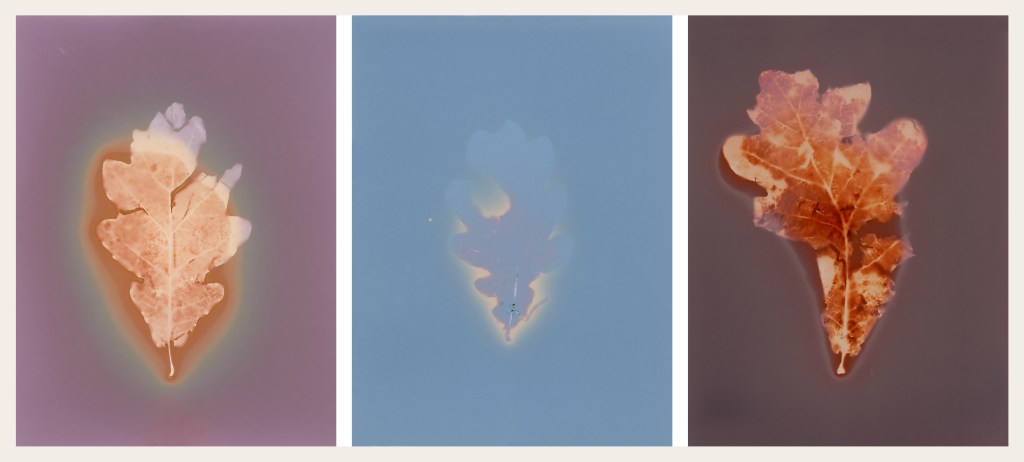
Oak leaf lumen prints © Clare Hewitt
The rest of the processes evolved as I spent more time in the forest and researched arboreal behaviour. For example, in Isabella Tree’s Wilding I learnt that mature oak trees each produce around 700,000 leaves every year. The leaves have many functions, but in Autumn, they drop to the floor and eventually become mulch and soil, which nourish the tree and its ecosystem. I made over 300 oak leaf lumen prints on the forest floor, before returning the leaves back to the ground. Soil is integral to the forest’s health and evolution. I learnt I could create soil chromatographs on site, connecting image-making to the forest’s material history.
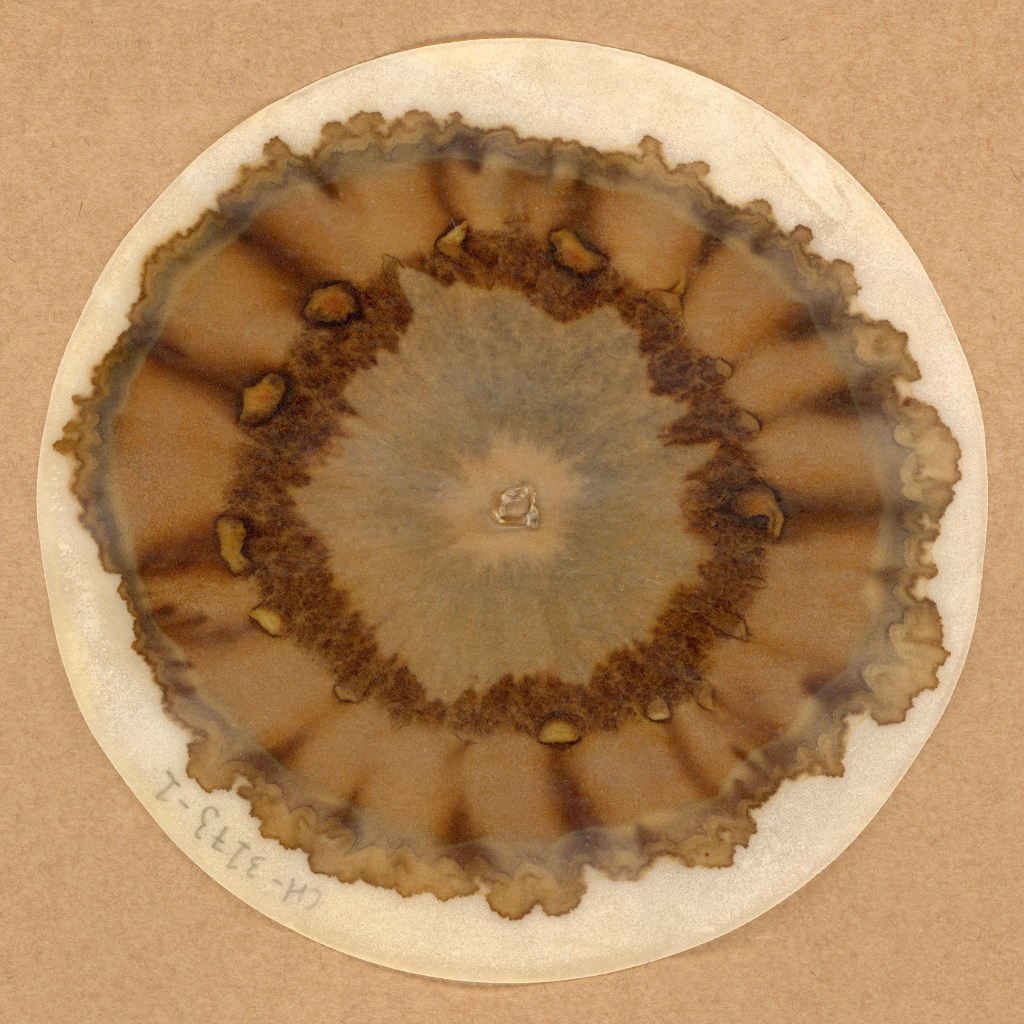
Soil chromatograph © Clare Hewitt
The Birmingham Institute of Forest Research is an outdoor laboratory. I didn’t remove anything from it to preserve the ecosystem. The methods I chose, therefore, occurred through a responsibility to the environment and care for its wellbeing, as well as a desire to represent the forest materially as well as visually. In The Living Mountain, Nan Shepherd writes about ‘being with’ the Cairngorms, returning to the mountain range regularly and observing it through experience. My studio relocation became a collaboration with place, and a sense of ‘being with’ the trees and their ecosystem.
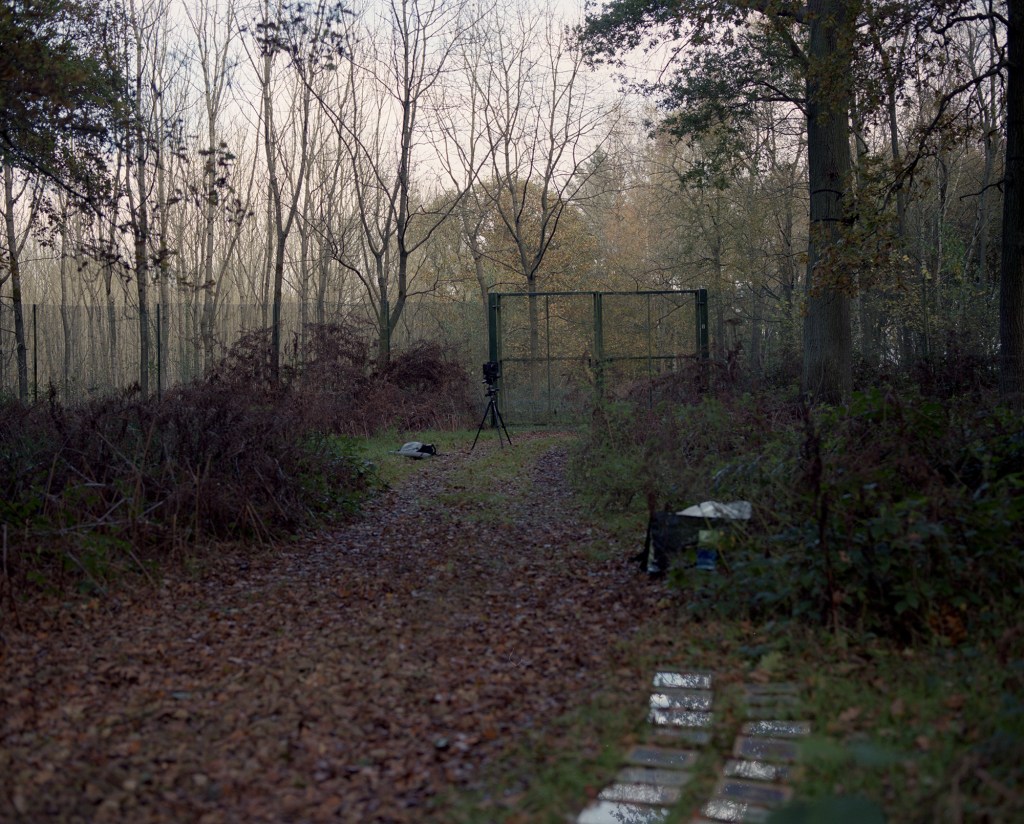
The Birmingham Institute of Forest Research © Clare Hewitt
Elizabeth Ransom: From the 10 May to 23 August 2025, you exhibited Everything in the forest is the forest at Impressions Gallery in Bradford, England. What steps did you take to ensure that the production of the exhibition was created with the environment in mind?
Clare Hewitt: To produce the exhibition, we collaborated with organisations committed to environmentally responsible practices. Examples include creating a wall of 300 oak leaf lumen prints on paper handmade by Fibrelab, a company that creates 100% recycled cotton paper using textile waste from the fashion and hospitality industries. I also worked with The Wood Shack, a Birmingham-based social enterprise who salvage and repurpose unwanted wood. Together with artist Jamie Murray, we taught The Wood Shack’s apprentices to craft frames from reclaimed scaffolding boards, 12 of which feature in the exhibition. Other frames and lightboxes were reused from previous Impressions Gallery exhibitions, many of which had toured to multiple locations.
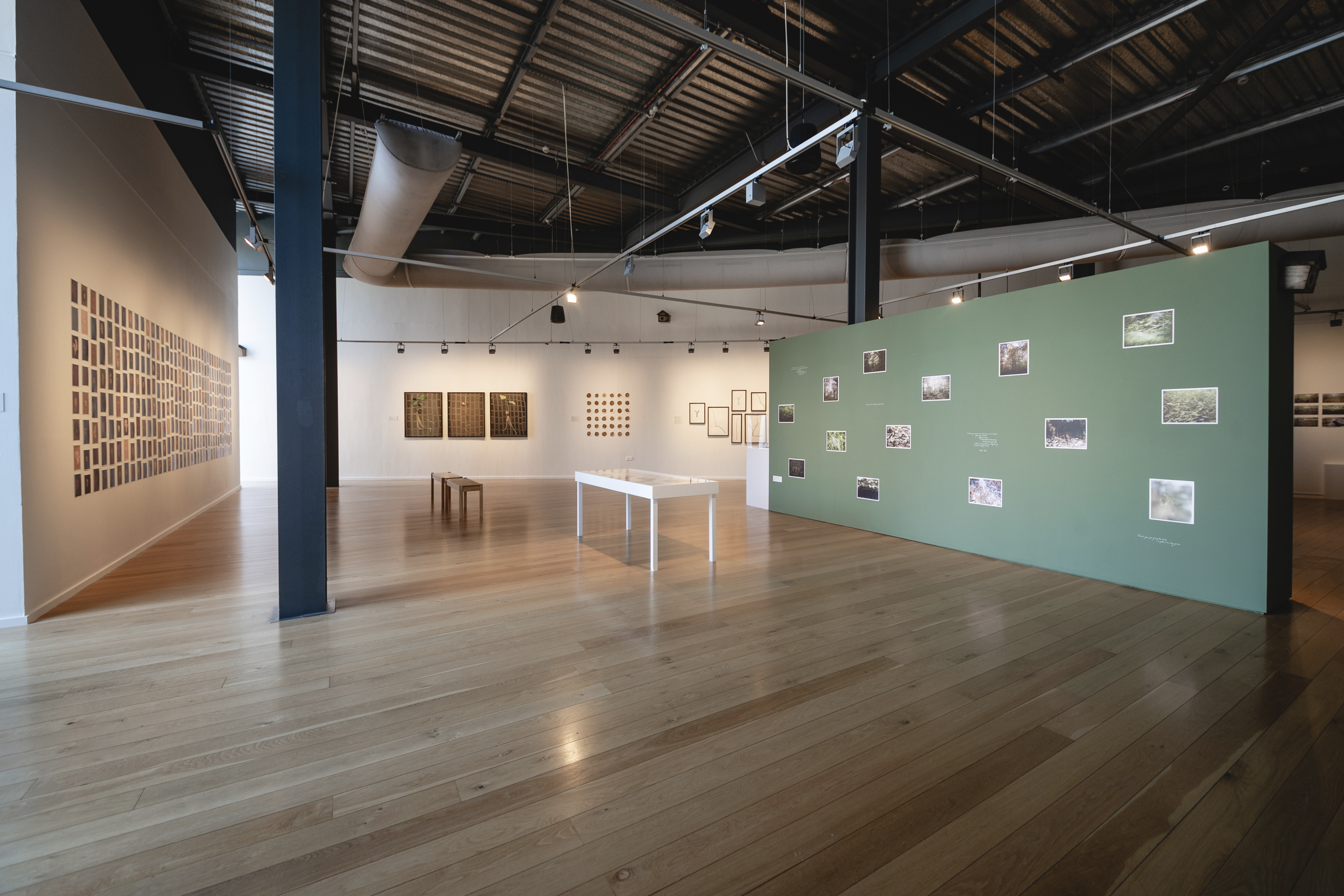
Everything in the forest is the forest exhibition at Impressions Gallery, Bradford, 2025 © Faye Hatton
Further collaborations include creating recyclable prints produced with Generation Press and paper handmade by artist Danielle Phelps from waste mount board, donated by a local framer. The gallery walls were painted using reclaimed materials from Seagulls, a Leeds-based social enterprise that rescues paint from landfill and reprocesses it.
I hand-printed portraits of the trees on expired darkroom paper, developed in homemade oak leaf and mint developer, from film processed in rosemary.
All these decisions and actions are documented in a report that will be free and publicly available, to encourage transparency, dialogue and support industry-wide proactivity.
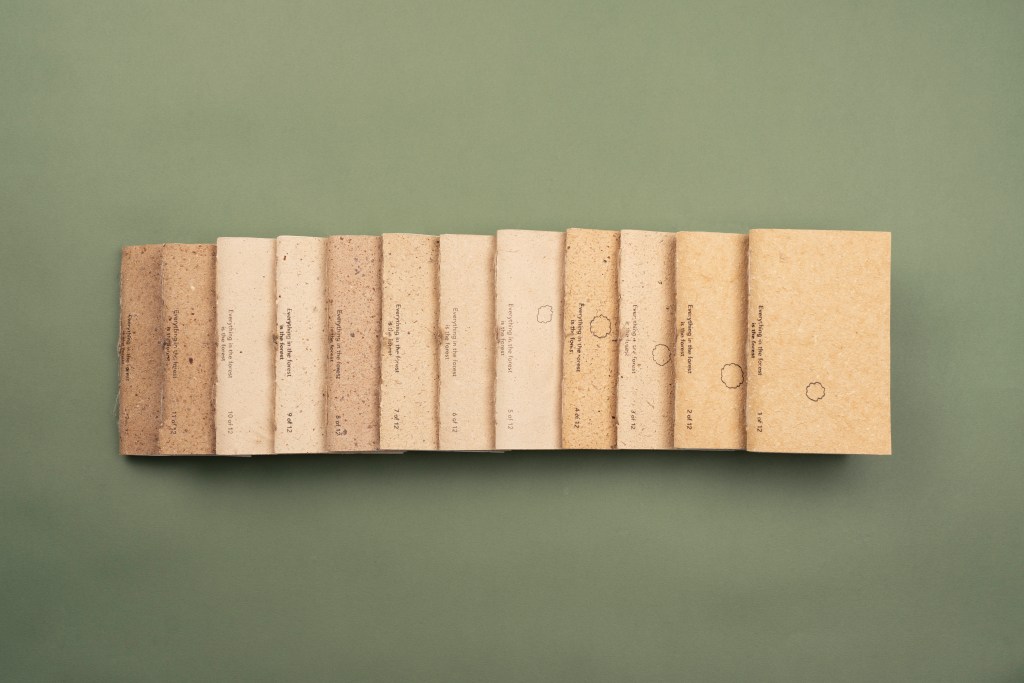
Everything in the forest is the forest biodegradable photobook © Curtis James & Stanley James Press
Elizabeth Ransom: In addition to the exhibition, you also produced a handmade biodegradable book that is a part of a borrow and share program. Can you tell us about the production of this photobook and how the community driven distribution system works?
Clare Hewitt: The book was developed over four years in collaboration with artists Danielle Phelps, Carolyn Morton, Alice Fox, and book designer Stanley James Press, supported by Arts Council England, Impressions Gallery and a-n The Artists Information Company.
Created with biomaterials specifically engineered for the project, including paper with birch polypore mushrooms, screenprinting ink with oak galls, and allotment-grown spun linen thread, every element is unique and handmade. A limited print run was guided by the seasonal availability of natural materials.
The structure of the book reflects the forest itself. It separates into 12 parts or mini-books, and instead of being sold, it was circulated through a borrow-and-share system during summer 2025. Mirroring the forest’s reciprocity, each custodian kept the book for a week before passing it on, often sharing it within their own communities along the way.
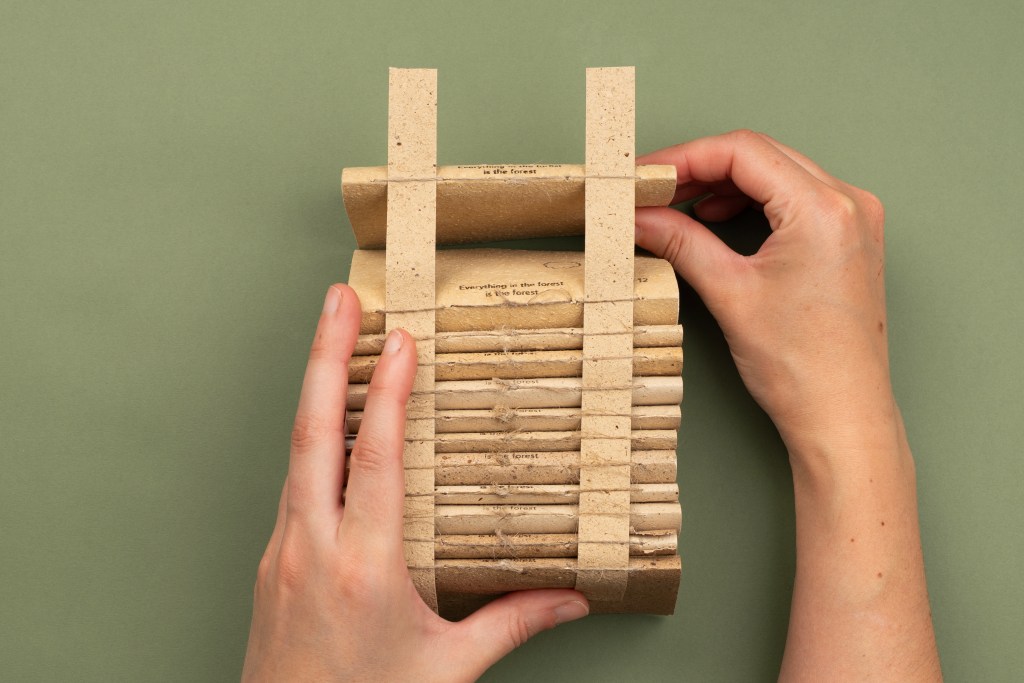
Everything in the forest is the forest biodegradable photobook © Curtis James & Stanley James Press
This created a network of exchange between individuals, groups, places and institutions. The books travelled into schools, forests, galleries, and community spaces, and became a catalyst for new conversations and connections. Participants also shared letters and artworks with one another, extending the project beyond the object itself.
The book includes both my work and that of workshop participants, alongside a collaboratively written text by Kerri ní Dochartaigh, Marchelle Farrell and Jessica J. Lee. They contribute sequentially across the mini-books, embodying the ethos of shared authorship and passing on.
Just like a leaf, the book is designed to be safely returned to the earth.
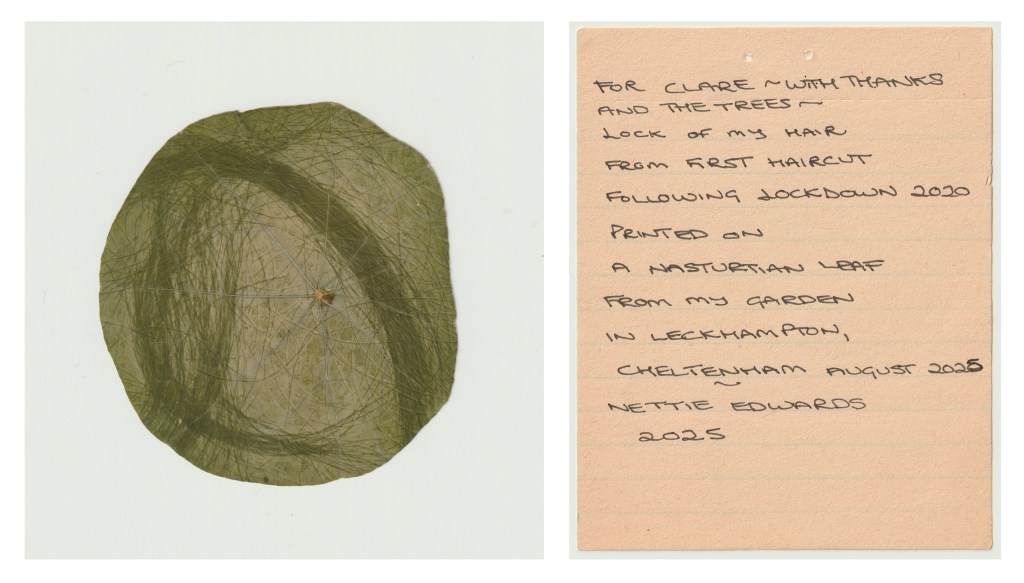
Everything in the forest is the forest book custodian materials © Nettie Edwards
For more information about Clare Hewitt and her practice please visit her website HERE.
 Women Alternative Photography Group
Leave a comment