14 July 2025
Interviewed by: Elizabeth Ransom
The Sapara people of the Ecuadorian Amazon have struggled from the illegal extraction of fossil fuels in their territory. Today there are less that 600 people remaining. In collaboration with Sapara Women, artist Tatiana Lopez shares powerful stories of ancestral knowledge by visualising themes of gender, dreams, and environmental conservation.
Elizabeth Ransom: In your series In Between Dreams the Forest Echos the Song of the Burning Anaconda you collaborate with Indigenous Sapara Women from the Ecuadorian Amazon to explore themes of dreams, gender, body-territory relations, identity, belonging, and environmental conservation. Can you introduce us to this multi-dimensional body of work and how you came to work with this community?
Tatiana Lopez: In Between Dreams the Forest Echos the Song of the Burning Anaconda is a long-term project that started from a research about dreams and how dreams are connected to the wellbeing of the land. In the Sapara culture, dreams are an important aspect of their lives, and the relationship they share with their spirituality. They say that dreams guide their daily lives and advise them of threats they might face in their territories.
This work explores notions of trans-corporeality and intersectionality to weave a narrative of the intimate and symbolic relationship that Sapara women share with the land, the other than human kin, and how the language of dreams reframe their sense of belonging, and identity by reclaiming their ancestral knowledge. I started my research back in 2020 while starting my research that explored body-territory relations in connection to indigenous cosmologies.
After finishing my first ethnographic film in collaboration with Sapara women, the project expanded into a visual research where co-creating through interviews, cyanotypes, songs, and photo embroidery guided the process of this work.
Elizabeth Ransom: Through the use of video, cyanotype, polaroid, embroidery, and photography you share stories of the land and stories of ancestral knowledge. Could you tell us a little bit about your process and how combining these methods aid in your storytelling practices?
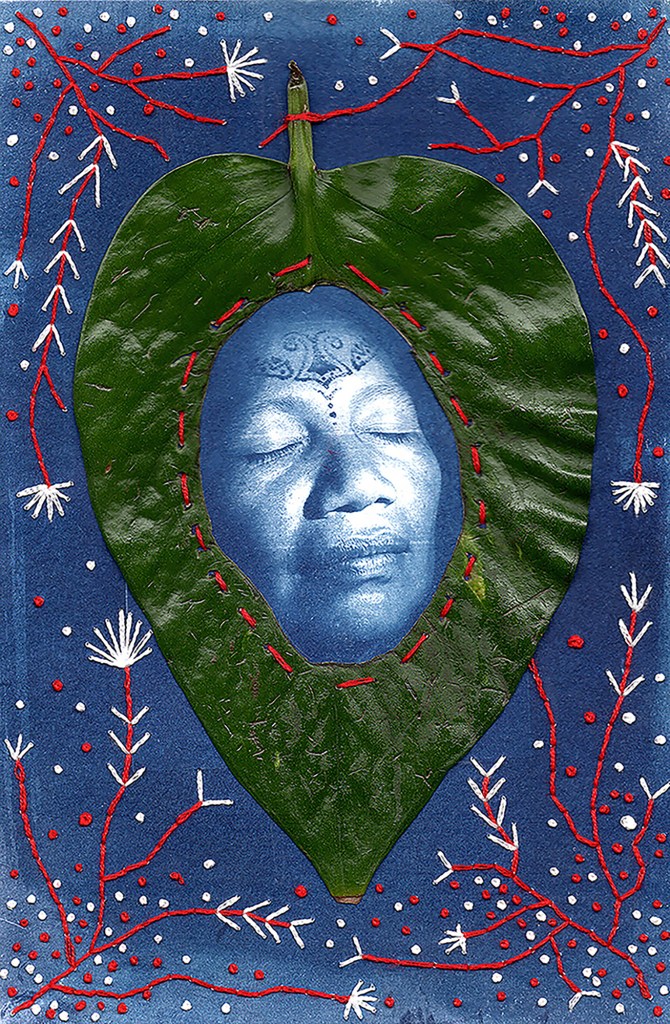
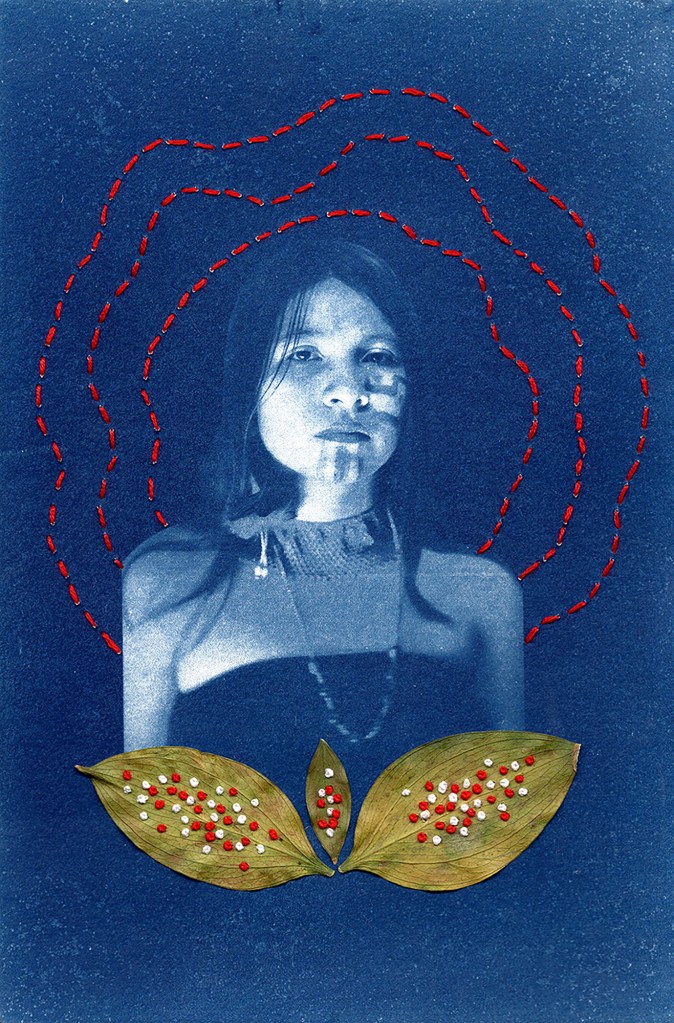
Tatiana Lopez: The project started with a film, thus, I had collected a lot of interviews from Sapara women who collaborated in this project. A lot of the interviews did not make it into the film, and I wanted to find a way to make these stories visible. That’s how the idea of creating the cyanotypes emerged. Symbolically, the cyanotypes’ deep blues represent bodily waters, various leaves and feathers represent the forest, and the red string highlights the ancestral lineage.
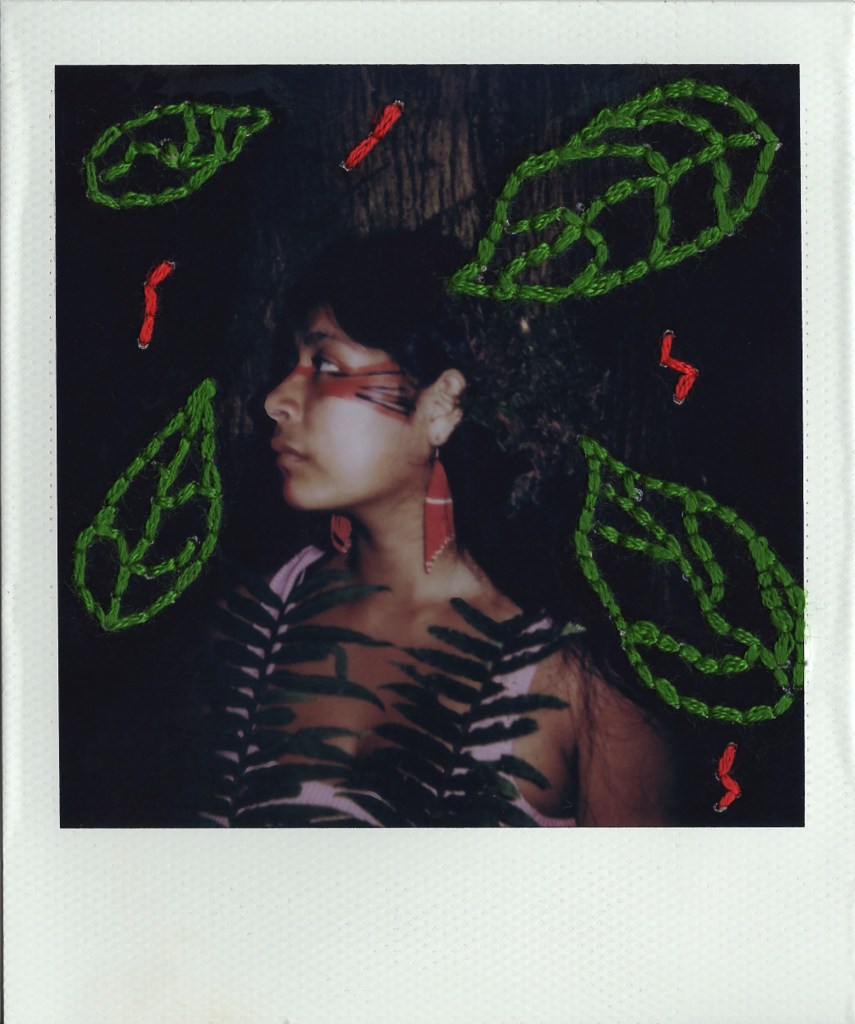
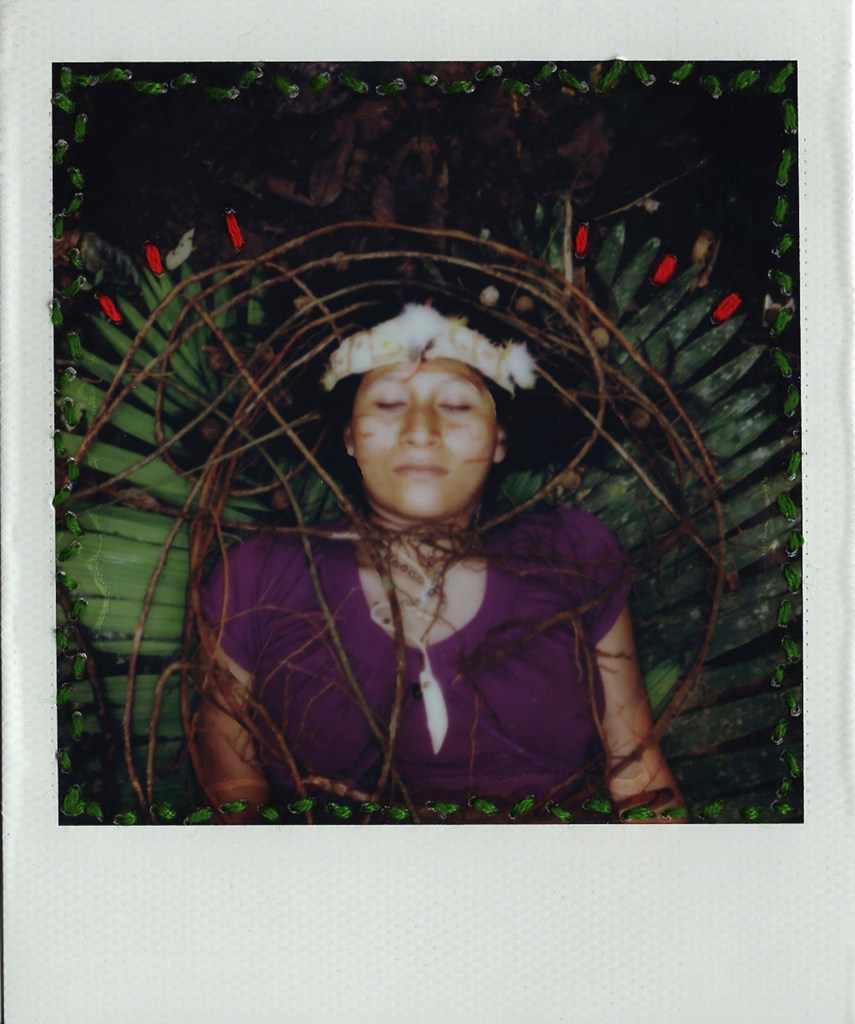
With embroidery, I attempt to reconstruct Sapara women’s narratives from the place of the observer and create images that highlight their belief that the physical and dream realms are intertwined. Another poignant part of my work is collaboration and co-creation, and that’s how the use of polaroid images are introduced as part of this project. During this collaboration Sapara women themselves embroider their own portrait. These works reflect on how colonization negatively impacted their Sapara cultural identity through the forced adoption of Western names.
I think visual stories can transcend individual experiences and combining different mediums of storytelling is a way to weave individual experiences in collective stories that have the power to heal the relationship we have with nature and inspire change.
Elizabeth Ransom: You explain that “for Sapara people, dreaming is considered a privileged entrance to ancestral knowledge”. Could you describe the significance of dreams and spirituality within this body of work?
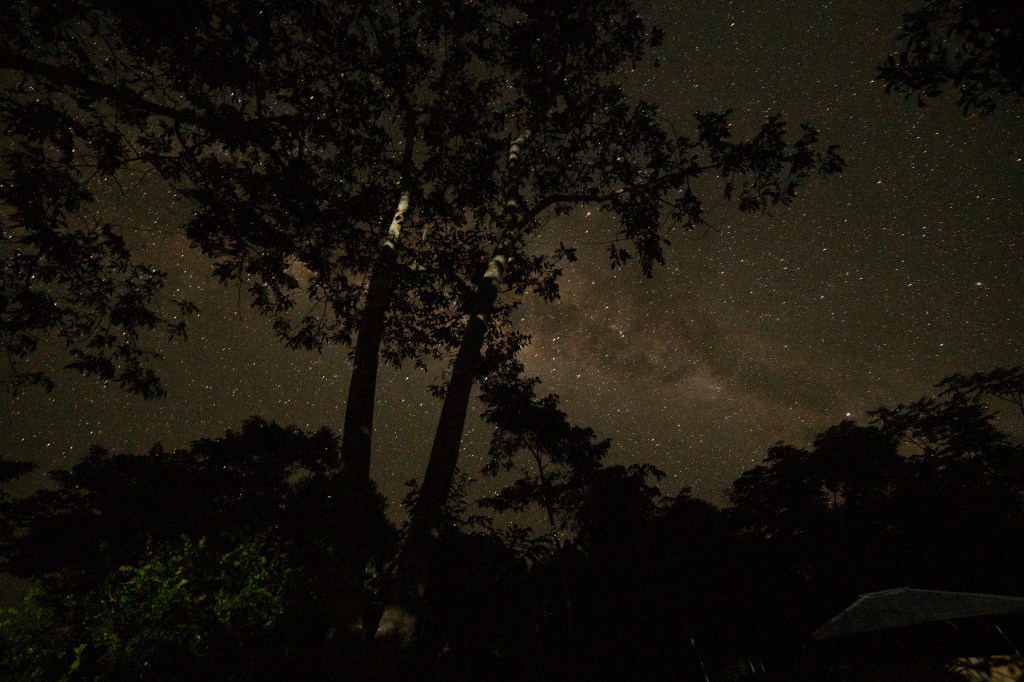
Tatiana Lopez: For Sapara people it is important to dream in order to maintain a witsa ikichanu, “good living.” They explained how in order to maintain a witsa ikichanu it is important to protect the energies of the forest, river, and wind while also maintaining an open connection to the spirit world through dreams. In this body of work I am interested in visually representing the intangible such as dreams.
In westernized societies we have created the dualities that separate humans from nature or spirit from body. For this reason we start disconnecting ourselves from our spiritual foundation.
The significance of portraying the invisible through the combination of photography, cyanotypes, embroidery, video, and songs is to open an experience through the senses following a rhythm that would not only represent body – territory relations but, the Sapara’s connection to dreams and the women’s belief that everything in the forest is alive and has a spirit.
Elizabeth Ransom: The Sapara people have struggled with illegal extraction of fossil fuels in their territory. With this loss of land comes a loss of cultural identity. Can you share with us the role symbolism plays within this work and how these symbols reflect on the destruction of indigenous land and the connection to the natural environment that the Sapara people have?
Tatiana Lopez: Symbolism is a significant part of this project. I wanted to visually portray that act of destruction and re-construction of new narratives through photo-embroidery and cyanotypes. The process of creating the cyanotypes is very meaningful and connects to the elements Sapara women considered important to maintain a witsa ikichanu, “good living.” These elements were the water that washed the prints, the wind that dried the prints and the natural leaves and feathers collected to embroider and create impressions onto the cyanotypes.
On the other hand, embroidery represents the process of “destroying” the photos to re-signify a narrative from a place of autonomy. This act invites Sapara women to reweave and document their memories and experiences, portraying the forest as an extension of their cultural identity. Each stitch is seen as a metaphor for liberation.
Elizabeth Ransom: This body of work includes personal narratives and oral histories. What role does preserving and sharing these narratives have on maintaining cultural heritage? How does sharing women’s lived experiences shape cultural understanding and change?
Tatiana Lopez: Sharing these narratives play a significant role in maintaining cultural heritage because for the Sapara, whose language is nearly extinct and population critically low, these narratives are living archives of their cosmology, traditional ecological knowledge, and unique relationship with the natural world, particularly their profound knowledge of the oneiric. By sharing these personal narratives and experiences shared by Sapara women who are the primary custodians of their families, this body of work aims to showcase Sapara’s culture and notions of ecological well-being, especially those rooted in spiritual connections like dreams to challenge dominant, often patriarchal or anthropocentric, understandings of the world. By amplifying these voices, the project illuminates the specific challenges women face in cultural preservation and territorial defense, showcasing their leadership and resistance against environmental degradation and culture erasure.
For more information about Tatiana Lopez and her practice please visit her website HERE.
 Women Alternative Photography Group
Leave a comment