
23 May 2024
Interviewed by: Elizabeth Ransom
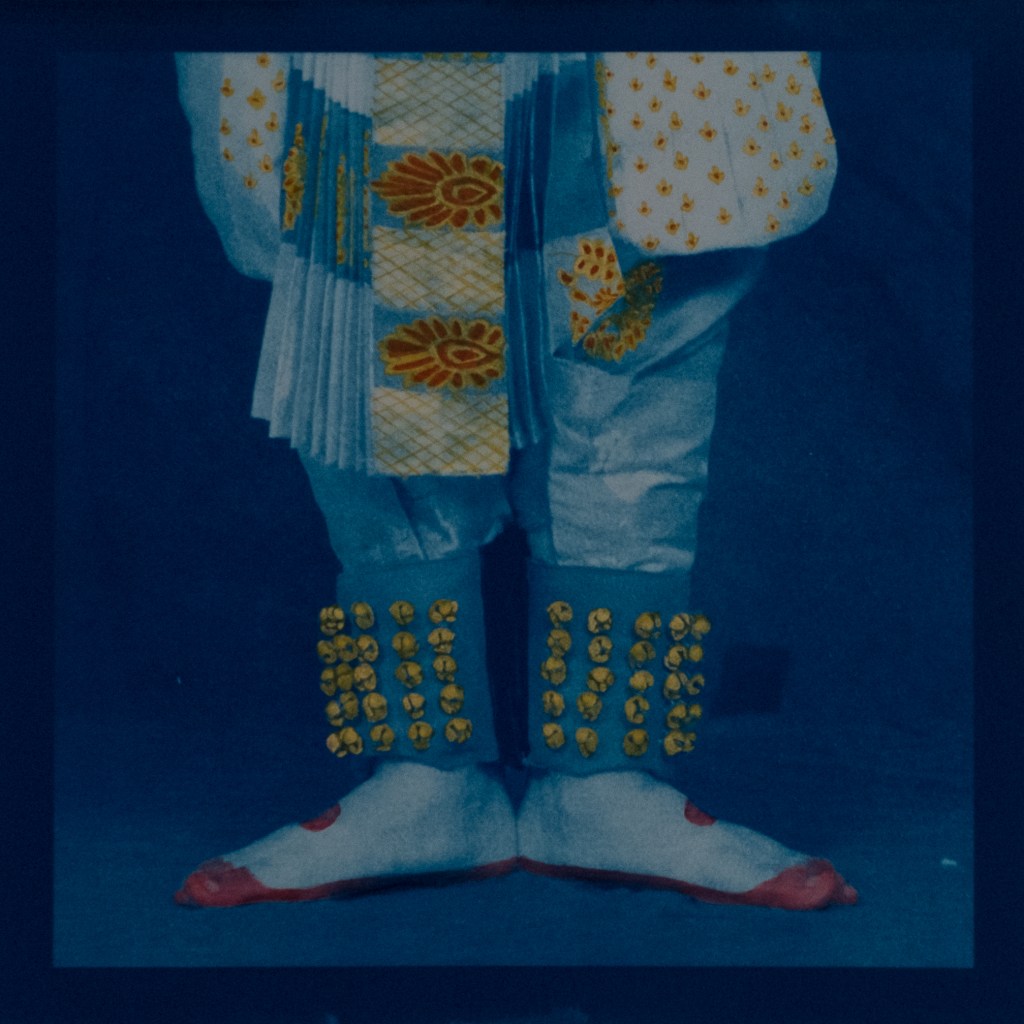
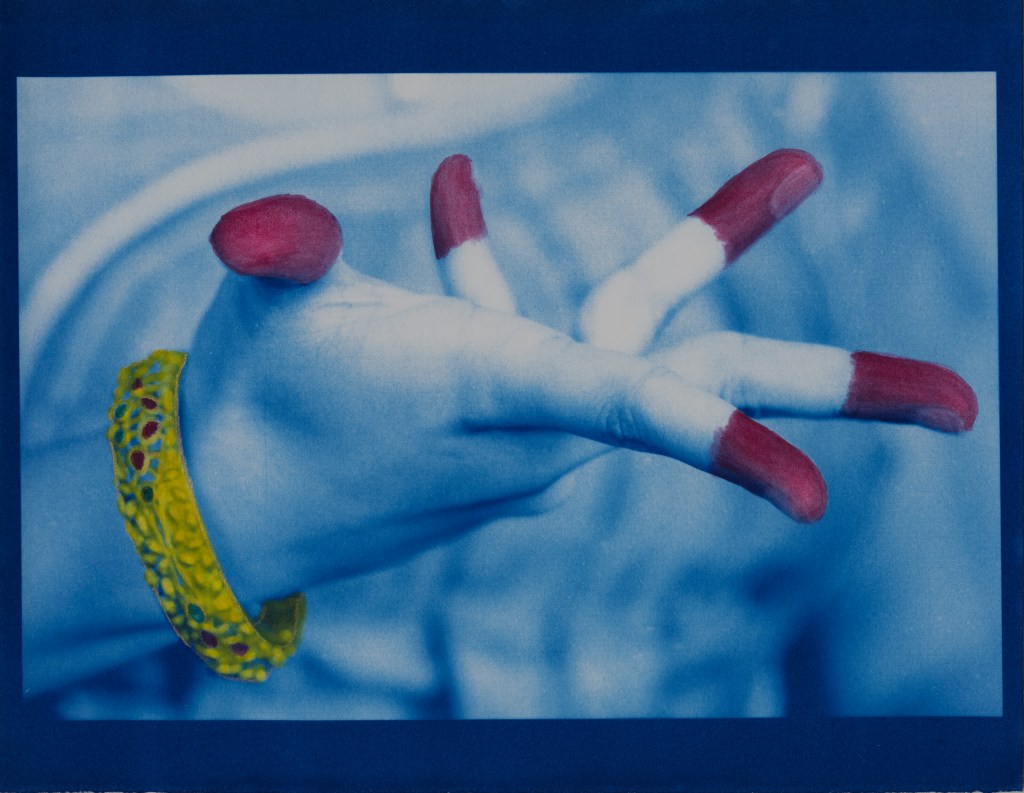
Photographer and visual artist Harini Krishnamurthy pays tribute to her cultural heritage in her series Honoring History: Hand-Painted Cyanotypes. With vibrant blues and pops of gold Krishnamurthy creates vivid images of her niece performing Bharatanatyam. These close up images draw the attention of the viewer to intricate details of the jewellery and hand gestures of the performer. Inspired by Tanjore paintings these photographic images are created using the combination of cyanotype and traditional hand painting techniques.
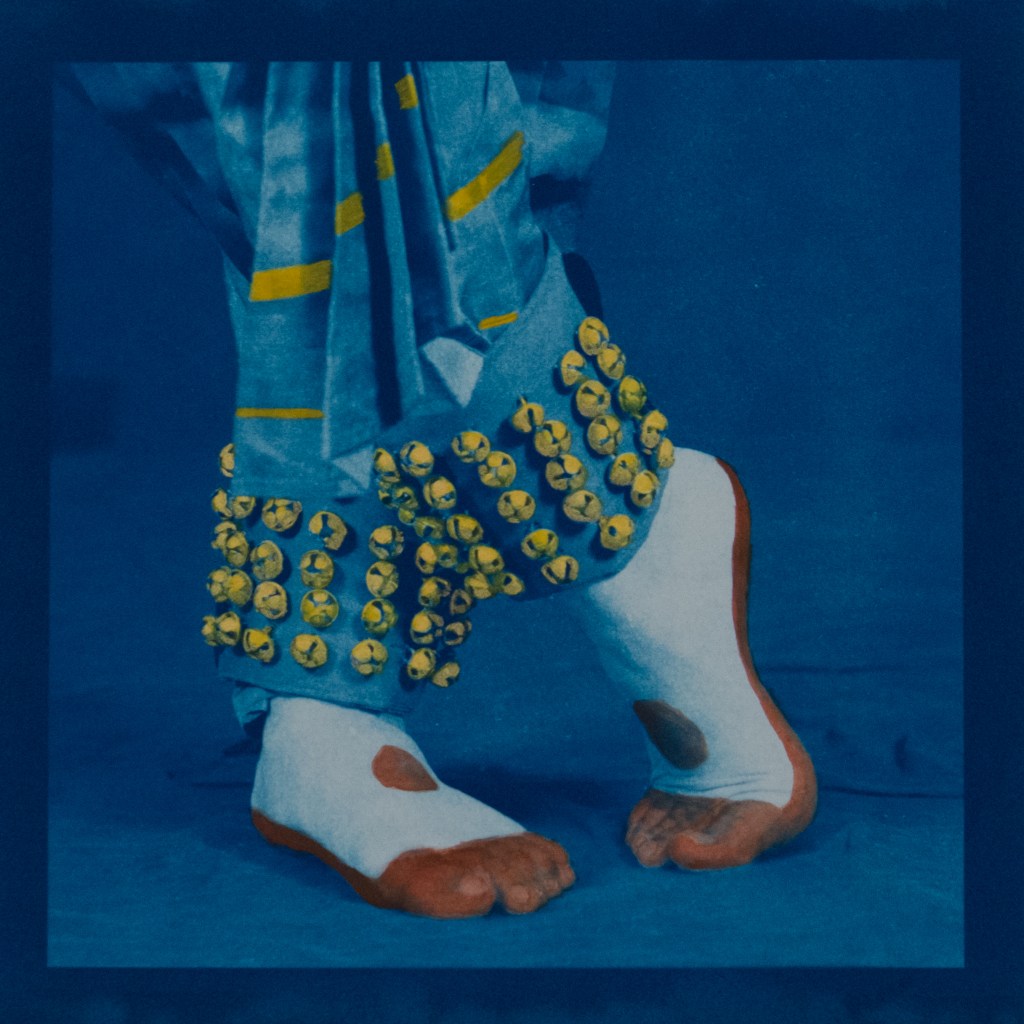
Elizabeth Ransom: As an Indian – American artist currently living in Seattle you explore themes of home, culture, and identity within your practice. Immigration can have a huge impact on a person’s sense of belonging, their sense of self and feelings of duality. How has this experience impacted your creative process?
Harini Krishnamurthy: I grew up in India and immigrated to the United States as an adult. Having lived here for several years, I have certainly questioned myself on who I am and where I belong. The culture I come from and the one I am (still) trying to assimilate into are starkly different. It took a number of years to come to terms with the fact that I would belong neither here nor there and that I am okay with creating a blend of the two that works for me. While not all my work is about my identity as an immigrant, my background certainly influences how I make my work and tell my stories. Sometimes, that means explicitly using themes from the culture I come from. Other times, it could mean using more universal themes. Either way, I think it’s important to me that people viewing my work can relate to it, regardless of our respective backgrounds.
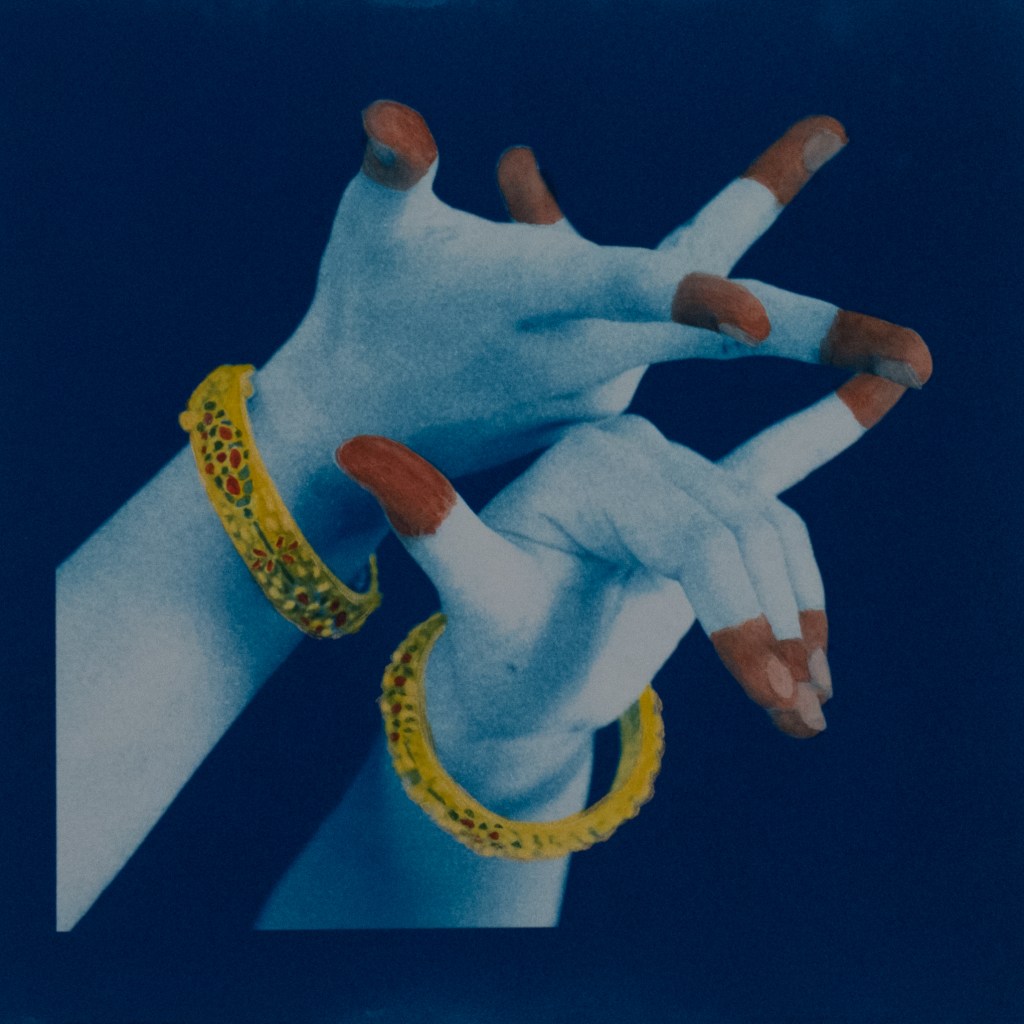
Elizabeth Ransom: In your series Honoring history: Hand-Painted Cyanotypes you combine the cyanotype process with hand painting techniques to pay tribute to your cultural heritage. This work features close-up images of your niece performing Bharatanatyam poses. Could you tell us a little bit about what Bharatanatyam is and the significance of the hand gestures?
Harini Krishnamurthy: Bharatanatyam is an ancient classical dance form from South India. It is thought to have originated over two thousand years ago. It was originally performed in temples and often used to express religious stories and themes. Bharatanatyam declined during the British rule of India but made a comeback in the early part of the 20th century. It is now a very popular classical dance form, learned and performed by many people all over the world.
The dance form is characterized by hand gestures and foot movements made in tune with musical and percussion accompaniment. It typically tells some sort of story, usually mythological or religious. The hand gestures, known as mudras, are used to represent objects or emotions, as a part of the storytelling.
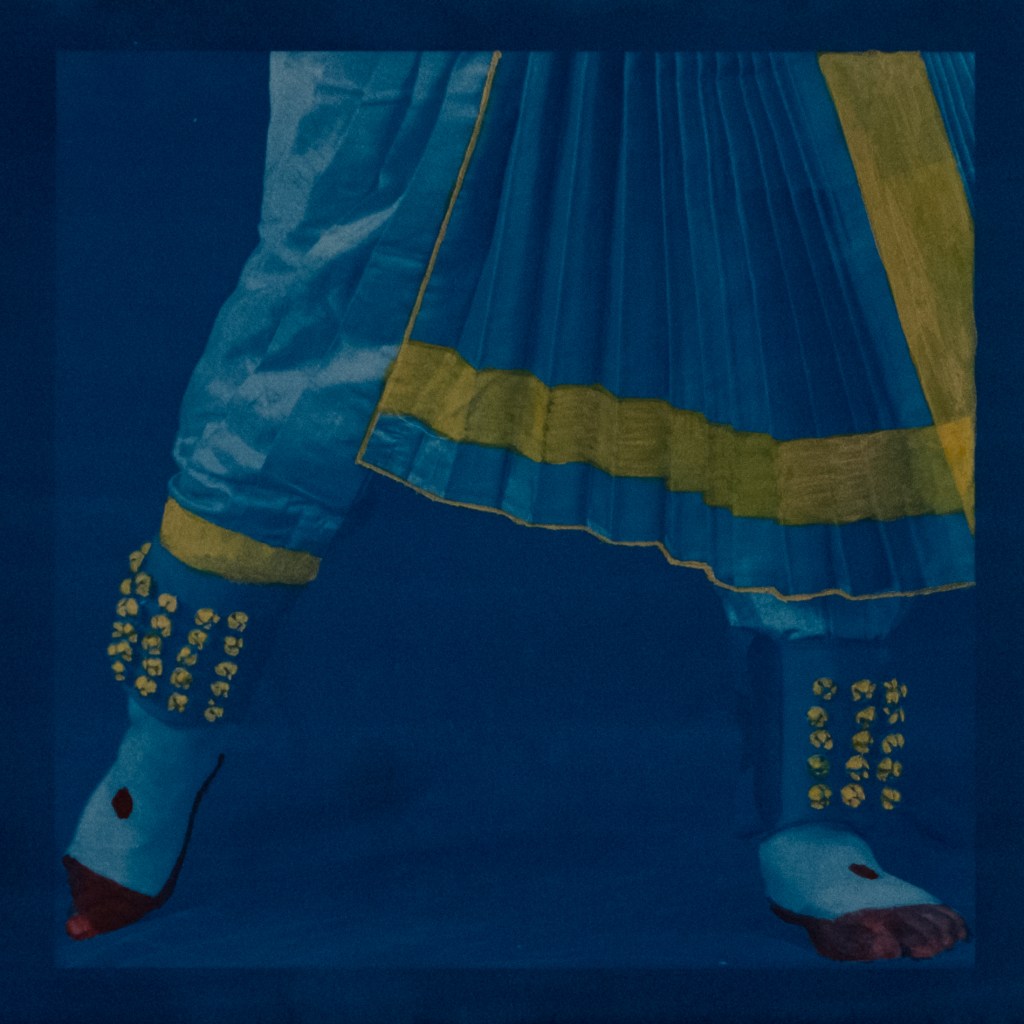
Elizabeth Ransom: For this body of work you were inspired by the South Indian Tanjore paintings. Tanjore paintings often feature bright colours and gold leaf. Can you tell us a little bit about the history of Tanjore paintings and how you chose to incorporate it into your photographic work?
Harini Krishnamurthy: Tanjore (anglicized from Thanjavur) paintings are a South Indian painting style that originated around the 16th century. It is named for the town of Thanjavur which was a centre for art and culture and whose rulers were patrons of the arts. The paintings feature vivid colours and gold leaf, and are often portraits of religious figures. The figures are usually surrounded by intricate décor. The gold leaf is typically used for the décor and clothing. Tanjore painting has become quite popular in mass culture and there are now many modern practitioners of the art form.
Tanjore paintings are an integral part of many homes and public buildings. I grew up seeing these paintings around me and was always amazed at the detailed artistry and craftsmanship that went into making these. The colours and the gold leaf always stayed with me and as I was working on the Bharatanatyam series, I borrowed from these specific aspects by using gold, for instance, on the clothing and jewellery.
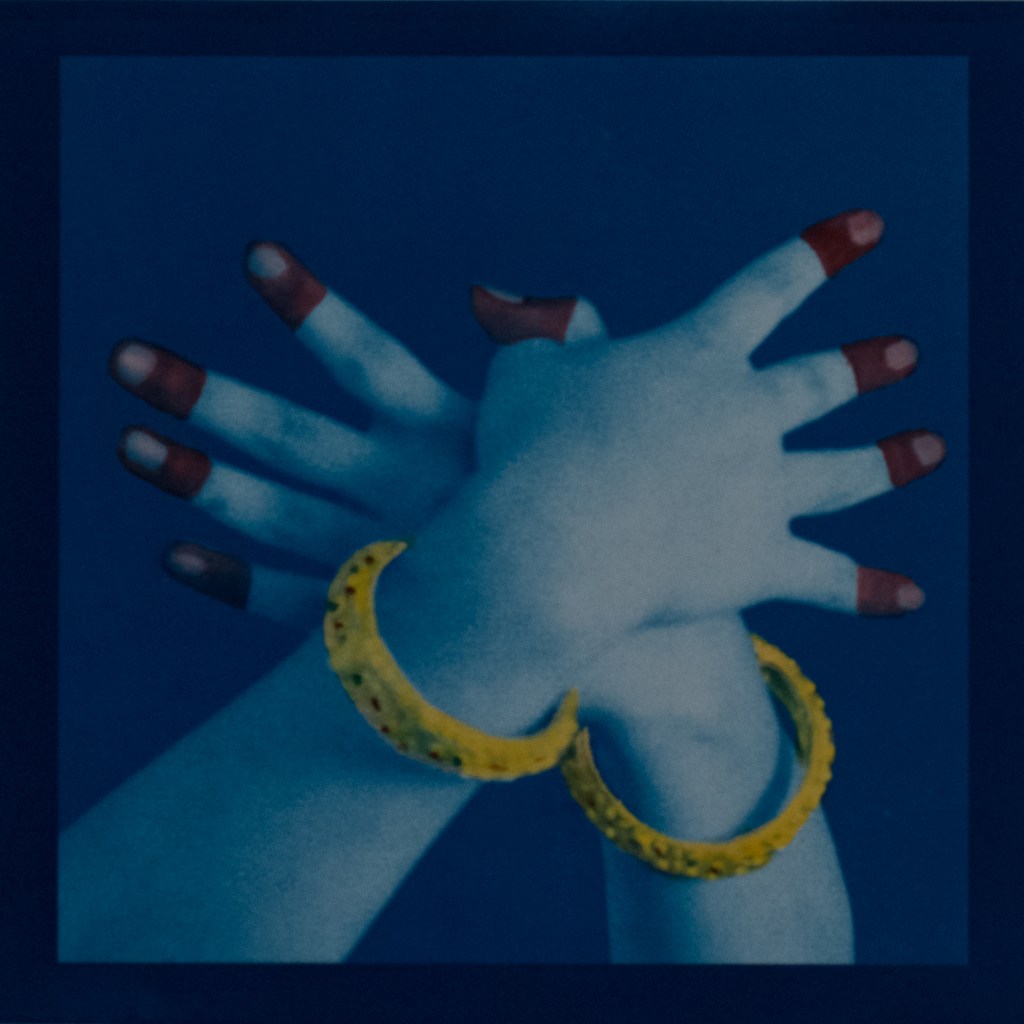
Elizabeth Ransom: Before the invention of colour photography many people hand painted their monochromatic photographs to make them appear more realistic. Could you tell us a little bit about how this process works and what techniques you had to employ when using this late nineteenth century technique?
Harini Krishnamurthy: Photography came to India through the British in the 19th century. Soon enough, there was a demand for studio photographs of wealthy people. Artists who previously made miniature paintings were employed to add colour to monochrome images. The painting technique involved covering areas of the photograph with opaque paint. Since these painters used to work on miniatures, there was incredible attention to detail. Sometimes, the painter would even replace parts of the original photograph with their own background or other detail. I used acrylic paint to colour and cover certain parts of the monochromatic (blue) image in my work. The parts that I chose to colour were mostly the clothing and jewellery, where I tried to pay special attention to the small details.
Elizabeth Ransom: In addition to historical painting processes, you also use one of the oldest photographic techniques known as cyanotype in this body of work. What inspired you to use this specific alternative photographic method over others?
Harini Krishnamurthy: I fell into this quite by accident. Cyanotypes were the first alternative process I learned to work with and I really loved the rich blue tones in the images. I would usually make photograms with plants and flowers. As I was photographing my niece, it occurred to me that I could use some of her costume jewellery to create a cyanotype photogram. I set this out in the sun as we continued our studio session – the image turned out pretty well! And that’s also when it occurred to me, the historic significance of the dance form as well as the photographic process and that I should really try to combine them, using the digital images.
For more information about Harini Krishnamurthy’s work please visit her website HERE
 Women Alternative Photography Group
Leave a comment